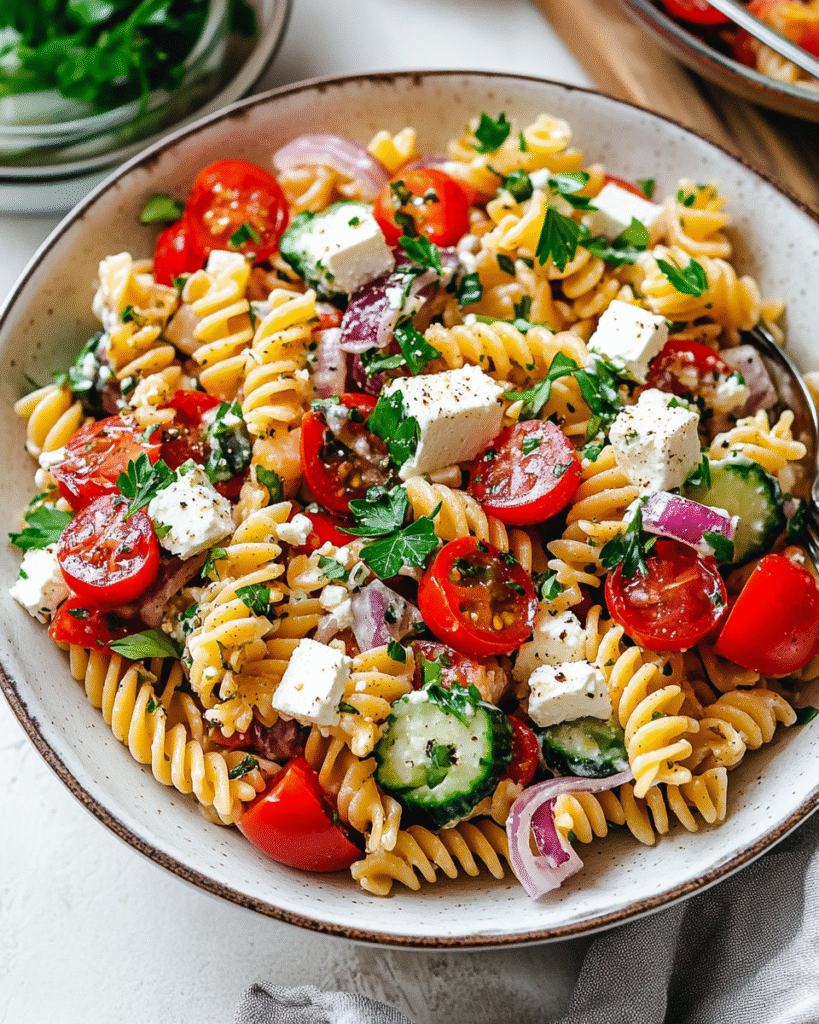
Summer Greek Pasta Salad is a vibrant, refreshing dish that captures the essence of a Mediterranean summer in every bite. This salad, bursting with crisp vegetables, tangy dressing, and creamy feta, balances flavor and nutrition perfectly. Whether you’re hosting a BBQ, need a quick lunch, or want to enjoy a taste of Greece at home, this recipe is your go-to solution. Let’s dive into the story behind this sunshine-on-a-plate salad.
What makes Summer Greek Pasta Salad stand out is its harmony of textures and bold flavors. The al dente pasta adds a satisfying bite, while cherry tomatoes burst with juiciness, cucumber offers a cooling crunch, and Kalamata olives lend their briny depth. This salad is more than a meal—it’s a celebration of fresh, seasonal ingredients that feel light yet deeply satisfying. The dressing, a zesty blend of olive oil, lemon juice, vinegar, and garlic, ties everything together with a tangy, herbaceous punch. Let’s explore what makes this dish a global favorite.
What is Summer Greek Pasta Salad?
Rooted in the simplicity of Greek home cooking, this salad blends pasta with colorful produce and feta to create a dish that’s equal parts rustic and refined. Traditionally, Greek pasta salads use small pasta shapes like orzo or ditalini to maximize surface area for the dressing. The combination of tangy, sweet, and briny flavors mirrors the Greek pantry: sun-ripened tomatoes, salty olives, zesty herbs, and creamy cheese. Unlike heavier pasta salads, this version leans into fresh ingredients and minimal cooking, perfect for warm weather. It’s a versatile dish that adapts well to local produce and dietary needs—a true Mediterranean classic with global appeal.
Reasons to Try Summer Greek Pasta Salad
There are countless reasons this salad deserves a permanent spot on your summer menu. First, it’s incredibly light yet satisfying—a perfect foil to heavier main dishes. The mix of fiber-rich vegetables, protein from feta, and heart-healthy olive oil makes it a balanced, nourishing choice. Plus, it’s quick to prepare—most of the work is chopping and tossing, ideal for busy days or last-minute gatherings. Families love it, too: kids often can’t resist the juicy tomatoes and olives, while adults appreciate the layers of flavor. Best of all, it’s make-ahead friendly—simply store in the fridge for an even tastier salad in a few hours as the ingredients marry flavors.
Ingredients Needed to Make Summer Greek Pasta Salad
- 12 oz dried shaped pasta (penne, orzo, or fusilli work well)
- ¼ cup red wine vinegar
- 3 tbsp fresh lemon juice (about 1 large lemon)
- 6 tbsp extra virgin olive oil (use high-quality for authenticity)
- 2 cloves garlic, minced
- 1 tsp dried oregano (fresh if available)
- ½ cup sliced Kalamata olives
- 2 cups halved or quartered cherry tomatoes
- 2 cups diced cucumber
- 1 cup diced, seeded red bell pepper
- ¼ cup thinly sliced red onion
- Salt and black pepper to taste
- ½ cup crumbled feta cheese
- 2 tbsp chopped fresh Italian parsley
Instructions to Make Summer Greek Pasta Salad – Step by Step
Step 1: Start by cooking the pasta in gently salted water until al dente. The salt here is crucial—it seasons the pasta itself, creating depth of flavor. For best results, aim for 85% done while cooking; after draining, the residual heat will finish the job. Once done, rinse the pasta under cold water to cool it completely. This prevents the salad from becoming warm and soggy, preserving its refreshing texture.
Step 2: While the pasta cools, prepare the dressing. In a small bowl, whisk together red wine vinegar, fresh lemon juice, extra virgin olive oil, minced garlic, and oregano. Taste and adjust the balance—add a touch more oil for richness or vinegar for brightness. This dressing is intentionally simple, letting the ingredients shine while binding the salad together.
Step 3: In a large mixing bowl, combine the now-cooled pasta with your chopped vegetables. Add the Kalamata olives, cherry tomatoes, cucumber, red bell pepper, and red onion. Toss gently to prevent bruising the tomatoes and damaging the olives. The key here is to use a variety of colorful, seasonal produce—look for firm, vibrant ingredients for the best texture and flavor.
Step 4: Pour the dressing over the salad. Start with half the dressing, then toss to fully coat the pasta and vegetables. Add the remaining dressing as needed—this salad is lightly dressed, but feel free to adjust to your taste. Sprinkle crumbled feta cheese and fresh parsley on top. Finally, season with salt and pepper. Let the salad rest for at least 15 minutes to allow the flavors to meld. Serve chilled or at room temperature, depending on the weather.
Chef’s Tips for a Perfect Result
- Use room-temperature pasta after rinsing to help the dressing cling better to the grains.
- Opt for pitted Kalamata olives to maintain a smooth texture—they’re less gritty in the final dish.
- Don’t skip the rinse after cooking the pasta; it’s the secret to a crisp, refreshing salad.
- For extra brightness, give the mixed salad a final squeeze of lemon just before serving.
- Customize the vegetable ratios to suit preferences: add diced zucchini, spinach, or even red onion slices for more layers.
Variations and Substitutions
Vegan Option: Substitute feta cheese with crumbled tofu or a plant-based alternative. The dressing remains vegan-friendly, with the exception of optional cheese.
Gluten-Free Alternative: Use gluten-free pasta (certified for food allergies) and double-check that the red wine vinegar is naturally gluten-free.
Low-Carb Version: Replace pasta with cauliflower rice or spiralized zucchini noodles for a lighter, vegetable-forward base.
Budget Swap: Cut costs by using white balsamic vinegar in place of red wine vinegar—it still provides the tangy depth without compromising flavor.
How to Serve and Pair
Summer Greek Pasta Salad shines as a side dish but can also anchor a casual meal. Pair it with grilled chicken, lemon-herb salmon, or a skewer of marinated olives and peppers for a complete Greek-inspired lunch. For a family-friendly option, serve it alongside pita bread and hummus. Presentation-wise, arrange the salad in a shallow serving bowl and garnish with extra parsley and olive slices for a pop of color. At BBQs, offer the dressing on the side for guests who prefer varying levels of tanginess.
Storage and Reheating
- Refrigerator: Store in an airtight container for up to 3-5 days. The pasta will absorb more dressing over time, so add a splash of olive oil when serving to refresh the texture.
- Freezer: Avoid freezing this salad—the vegetables will release water, and the pasta will become mushy.
- Room Temperature: Keep for up to 2 hours in a cool environment. Ideal for picnics or summer potlucks.
- Reheating: For warm pasta salad, toss the ingredients in a pan with a drizzle of olive oil over medium heat until heated through. Avoid the microwave, as it can dry out the feta and cucumber. If reheating with feta, add it after warming to preserve its creamy texture.
Nutritional Values
- Per Serving: 251 kcal
- Protein: 6g
- Carbohydrates: 30g
- Fat: 12g
- Fiber: 2g
- Approximate values.
Frequently Asked Questions
Can I substitute red wine vinegar with another acid?
Yes, balsamic or white wine vinegar work well. Each adds a slightly different nuance—balsamic for a sweeter tang, white wine for a milder acidity.
How do I know if the dressing is balanced?
Your palate is the best guide! The dressing should be tangy but not overpowering. Taste it before adding to the salad and adjust oil or vinegar accordingly.
Why is my salad gummy after sitting in the fridge?
Over time, the pasta absorbs dressing and moisture from the vegetables. Toss with a little extra olive oil when serving to refresh the texture.
Can I prepare this salad a day in advance?
Absolutely! In fact, resting it overnight allows flavors to develop. Store in the fridge and stir before serving to redistribute ingredients.
What’s the best way to customize this salad for a dinner party?
Add grilled chicken shreds or chickpeas for protein, and finish with edible flowers or microgreens for an elegant touch.
Conclusion
Summer Greek Pasta Salad is a radiant, nourishing dish that brings the spirit of Greece to your table. Its vibrant mix of tangy feta, bright vegetables, and zesty dressing offers a light yet satisfying bite that’s perfect for warm-weather dining. Whether you’re craving a make-ahead side or a refreshing main, this salad is as versatile as it is irresistible. Let the bold flavors transport you to sun-drenched Mediterranean shores with every forkful.
Print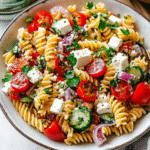
Summer Greek Pasta Salad
- Prep Time: 15
- Cook Time: 10
- Total Time: 25
- Yield: 6 servings 1x
- Category: Salads
- Method: Cold recipe
- Cuisine: Greek/Mediterranean
- Diet: Vegetarian (dairy-friendly)
Description
A refreshing Mediterranean-inspired pasta salad with crisp veggies, tangy dressing, and creamy feta. Perfect for summer gatherings or a light lunch, this dish balances fresh produce, herbs, and a zesty oil-lemon dressing for vibrant, satisfying flavors.
Ingredients
12 oz dried shaped pasta (penne, orzo, or fusilli)
¼ cup red wine vinegar
3 tbsp fresh lemon juice
6 tbsp extra virgin olive oil
2 cloves garlic, minced
1 tsp dried oregano
½ cup sliced Kalamata olives
2 cups halved cherry tomatoes
2 cups diced cucumber
1 cup diced red onion
1 cup crumbled feta cheese
Instructions
Boil and drain the pasta according to package instructions (reserve a splash of pasta water if needed to adjust consistency)
Whisk together red wine vinegar, lemon juice, olive oil, garlic, oregano, and a pinch of salt to make the dressing
Chop all vegetables (tomatoes, cucumber, red onion) except the olives and feta
In a large bowl, combine cooked pasta, chopped vegetables, olives, and crumbled feta
Pour the dressing over the salad and toss until evenly coated
Add crumbled feta just before serving to preserve texture
Chill for at least 30 minutes before serving to let flavors develop
Notes
For a non-alcoholic version, substitute red wine vinegar with white vinegar or balsamic vinegar
Make ahead: Salad improves in flavor when chilled for 1–2 hours
Replace feta with dairy-free cheese if needed
Pasta shape determines yield; orzo or ditalini works best for Mediterranean authenticity
Nutrition
- Serving Size: 1 cup
- Calories: 320
- Sugar: 4g
- Sodium: 850mg
- Fat: 22g
- Saturated Fat: 4g
- Carbohydrates: 20g
- Fiber: 2g
- Protein: 10g
- Cholesterol: 25mg