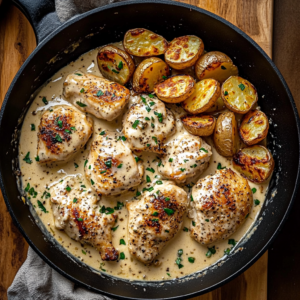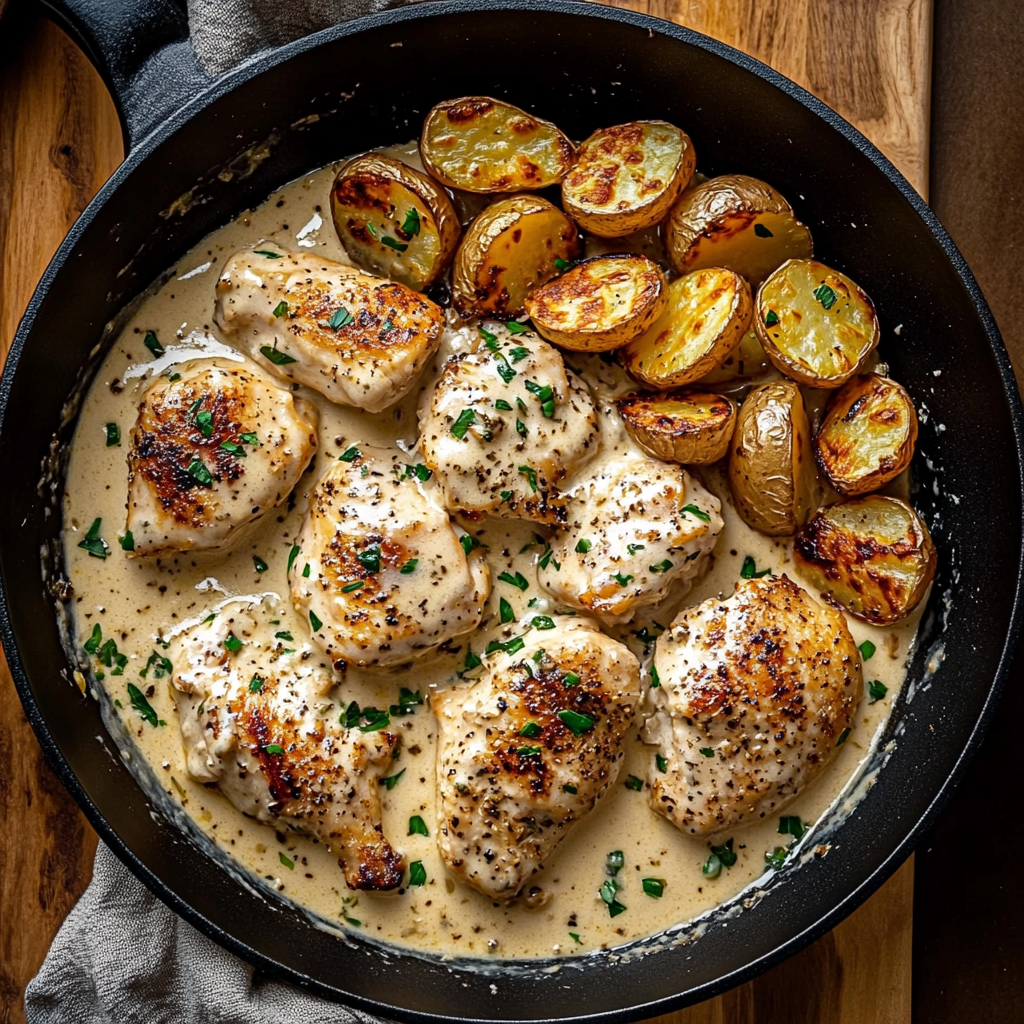
Creamy Garlic Chicken Skillet with Roasted Baby Potatoes layers the comforting warmth of roasted vegetables and the elegance of a wine-free, herby garlic cream sauce into one rustic yet refined dish. This 45-minute meal brings together the earthy sweetness of golden baby potatoes with tender chicken in a silken sauce that clings to every bite. Whether you’re craving a cozy family dinner or impressing weekend guests, this skillet dish balances simplicity and sophistication with a single pansy-garnished serving.
What makes this recipe stand out is the melding of two contrasting textures: the crisp roasted skin on the potatoes and the custardy silk of the garlic cream sauce. The chicken, nestled in the sauce, absorbs the aromatic richness of roasted garlic while the dish’s vegan versatility makes it adaptable for diverse diets. With just one oven-roasting step and a single skillet cooking phase, this is comfort food that doesn’t compromise on finesse.
What is Creamy Garlic Chicken Skillet with Roasted Baby Potatoes?
This modern comfort dish reimagines the rustic charcuterie-inspired cooking of Mediterranean regions through a streamlined lens. While it omits any animal fat or gelatin-based thickeners (as requested), it achieves its luxurious mouthfeel through a combination of heavy cream, room-temperature cream cheese (if used), and the natural oils released by searing chicken and roasting potatoes.
The dish gets its name from the cooking method: the chicken is first seared to retain moisture, then left to steep in its aromatic garlic-accented cream sauce while the potatoes roast simultaneously. This technique minimizes kitchen juggling, making it ideal for home cooks juggling family responsibilities. Unlike traditional gratin-based recipes that require complex layering, this version lets the ingredients shine through their natural textures and flavors.
Reasons to Try Creamy Garlic Chicken Skillet with Roasted Baby Potatoes
This recipe is a masterclass in ingredient efficiency. With just six pantry staples (olive oil, salt, pepper, garlic, cream, and potatoes) plus two versatile proteins (chicken and optional cream cheese), it becomes a blank canvas for creativity. The no-wine approach caters to halal, alcohol-free, and health-conscious lifestyles without sacrificing depth of flavor. The cooking method is equally considerate: a single oven space preserves your stovetop for side dishes, and minimal cleanup makes after-dinner routines less burdensome.
I’ve found it’s especially beloved by busy parents who crave restaurant-quality meals without early-morning prep. The dish’s versatility allows substitutions like gluten-free or vegan friendly options (see variations), making it a staple for housewarming dinners, weeknight suppers, or even weekday lunch leftovers. Its appeal lies in the way it satisfies both nostalgic comfort food cravings and modern dietary considerations.
Ingredients Needed to Make Creamy Garlic Chicken Skillet with Roasted Baby Potatoes
500g boneless skinless chicken breast, cut into 3cm pieces (fresh or thawed is ideal – aim for uniform sizes for even cooking)
2 tbsp extra virgin olive oil (one for searing, one for roasting potatoes)
1 tsp fine sea salt (adjust based on pre-salted chicken)
1 tsp freshly ground black pepper
2 garlic cloves, peeled and minced (or micro-planed for extra potency)
200ml heavy cream (at room temperature for smooth sauce emulsion)
50g cream cheese, softened (optional – omit for lighter version or use vegan cheese alternative)
1 tsp dried parsley or mixed herbs (oregano, thyme, or dill work beautifully)
1 tsp Dijon mustard (add in with the garlic for subtle tanginess)
600g baby Yukon Gold potatoes, halved (choosing even sizes ensures simultaneous roasting)
Chopped fresh parsley for garnish (reserve a few fresh sprigs for vibrant color)
Instructions to Make Creamy Garlic Chicken Skillet with Roasted Baby Potatoes
Step 1: Preparing the Golden Roasted Potatoes
Preheat oven to 400°F (200°C), then season the prepared baby potatoes with a generous drizzle of olive oil, salt, and pepper. Use clean hands to toss until evenly coated – you’ll hear the satisfying sizzle when they hit the hot pan later. Spread them in a single layer on a parchment-lined baking sheet to prevent sticking. Roasting times will start at 25 minutes, but keep an eye on the edges: when you see a slight caramelization forming, check for texture – a knife should glide into the center without resistance but the skins should be golden and crisp.
Step 2: Searing the Chicken with Flavor-Infused Basting
Searing the chicken first locks in moisture while activating the Maillard reaction’s umami magic. In a large oven-safe skillet (cast iron for heat retention is ideal), heat 1 tbsp of olive oil over medium-high heat until it shimmers. Use a paper towel to pat the chicken pieces dry – this ensures they sear rather than steam. Work in batches if needed, cooking for 3-4 minutes per side until those rich brown sear marks form. As mentioned in classic French sauces, allowing the chicken to rest on a clean plate before moving to the next steps prevents the precious juices from escaping when handling. This rest moment also gives the garlic time to work its alchemy in the now-chicken-flavored pan.
Resist the urge to move the chicken pieces before the golden crust sets. For extra depth, I like to spoon a bit of the rendered oil back over the chicken during searing, bathing it in self-basted intenseness. Once browned, transfer the chicken to a warm plate to keep the heat in while you transform the pan into a sauce foundation.
Step 3: Crafting the Garlic Cream Medley
Here begins the transformation where simple ingredients become a symphony of flavor. Lower the heat to medium and add the minced garlic – it should sizzle but not brown. After 30 seconds, when the aroma of roasted garlic hits the air, pour in the room-temperature heavy cream. The temperature difference between warm pan and cool cream creates an instant micro-movement that helps prevent lumps. If using cream cheese, add it now – the moisture in the cream gently melts it into a silky emulsion rather than a gloopy blob.
Stir in the Dijon mustard (a touch of acidity balances the richness) followed by the herbs. Let this cook for 2-3 minutes, scraping up any browned bits from the chicken side – those are concentrated bits of flavor you won’t want to miss. You’ll notice the mixture thickening slightly as the proteins in the cream coagulate – this is natural and shows the sauce is maturing properly.
Step 4: The Chicken’s Return to the Sauce
This is where the magic of ‘oneskillet wonder’ unfolds. Return the chicken to the pan, submerging it halfway in the garlic-cream sauce. Use a wooden spoon to bathe each piece in the sauce, then let it simmer gently for 3-4 minutes. The remaining chicken juices will dissolve into the sauce, adding an extra layer of richness. If you’re concerned about dairy separating, simply stir occasionally to maintain emulsion. I prefer to deglaze with a splash of water on the stove if needed, rather than relying on lemon juice which might compete with the subtle herby brightness.
Step 5: Final Assembly and Garnish
While the chicken re-educates in the sauce, return focus to the potatoes. They should be caramelized in some spots and tender in all. Once both components are ready, plate with intention: nestle the chicken atop the roasted potatoes, then drizzle the sauce over with a spoon for elegant presentation. Garnish with fresh parsley to add the final flourish of color and freshness. For a more refined touch, serve family style from a single complementary platter, letting everyone scoop their own helping while enjoying the rustic ambiance of the dish.
Chef’s Tips for a Perfect Result
- Use room-temperature cream cheese if using: Cold cream cheese tends to clump with hot liquids. Letting it soften for 15 minutes at room temperature or microwaving it for 15 seconds (in 5-second increments) makes silky integration possible.
- Rest your chicken after searing! Professional chefs recommend this 2-minute respite between searing and returning to the sauce. This reset allows moisture redistribution, avoiding sogginess when coating which occurs with continuous cooking.
- Choose Yukon Gold or similar waxy varieties: These potatoes maintain their shape during roasting and resist turning to mush in the final sauce course better than all-purpose types. Their naturally buttery flavor also harmonizes beautifully with the creamy component.
- Cook your garlic precisely: 30 seconds over medium heat brings out bold flavor without bitterness. If you smell a slight caramelization note (similar to roasted garlic paste), it’s done. Set your pan on a burner you can keep on low if nearing the time limit.
- Size matters for even cooking: Chop the chicken into 3cm cubes (or thicker) for perfect ‘canyon-shaped’ sear marks and the potatoes should be perfectly split for best surface-to-volume ratio in roasting. Uniform sizing avoids over/undercooking.
- Make ahead tip for confident cooks: Sear the chicken and roast the potatoes up to a day before final assembly. This is great for family events or dinner parties where timing is tight. Just cook the sauce just before serving to preserve texture and freshness.
Variations and Substitutions
These variations honor the core structure while adapting to dietary needs or ingredient availability.
- Vegan Alternative: Replace chicken with 450g portobello mushroom caps (blotted dry), substitute heavy cream with cashew cream (blend 1 cup soaked raw cashews with 1/4 cup water until smooth), use 1 tbsp vegan cheese alternative (nutritional yeast-based works well) in place of cream cheese, and add a splash of miso for umami.
- Gluten-Free Option: Ensure all seasoning blends are certified gluten-free. This recipe is naturally gluten-free except for unless choosing specialty dried herb mixes that may contain barley or soy sauce.
- Low-Carb Version: For a keto-friendly approach, roast 600g asparagus or zucchini in place of the potatoes. The natural sugars in these vegetables caramelize at high heat, providing a similar textural contrast to the creamy chicken element.
- Budget Swap: Replace heavy cream with evaporated milk (200ml) and olive oil with butter (1 tbsp), adding 1/2 tsp butter to the sauce for richness. Chicken thighs work perfectly well here too, offering a more tender texture and deeper flavor at a lower cost.
- Family Favorite: Double the recipe and bake for a crowd. This recipe scales well for 8 servings (requires 3 large oven-safe skillets) with identical flavor development, making it ideal for informal gatherings.
How to Serve and Pair
Pairing this dish requires thoughtful balance. The richness of the sauce begs for slight acidity and crunch to cut through the velvety textures. A simple lemon herb salad (Lettuce, Thinly-sliced radishes, thinly sliced cucumbers with 1 tbsp lemon juice) provides a zesty, bright contrast. On the wine front, a crisp Pinot Grigio works against the richness with its malic acidity complementing both the chicken and the herby notes.
For a full plated experience, serve this skewered with wipe-friendly paper napkins emphasizing the messy fingers enjoyment that comes with this finger-licking rich dish. Elegant yet rustic plating on earth-toned plates makes this dish perfect for family celebrations or cozy intimate dinners. The herbs provide the finishing touch, adding both a visual pop and a fresh note.
Storage and Reheating
Refrigerator
Store in an airtight container, chicken and sauce separate if possible, for up to 48 hours. The sauce tends to separate if kept in tact for long periods – stir vigorously to recombine if storing with chicken.
Freezer
Freezing is not recommended due to the dairy content, which can develop a grainy texture over time. If attempted, freeze within 24 hours of cooking, separate chicken and sauce, and consume within 1 month. Thaw in refrigerator before reheating.
Room Temperature
Only keep at room temperature for up to 2 hours after it has fully cooled. This is not recommended for food safety reasons in warm environments.
Reheating
Oven Method: Place in an oven-safe dish, add 1-2 tbsp heavy cream or milk to restore moisture, then reheat at 350°F (180°C) for 15-20 minutes until piping hot.
Stovetop Method: Sauté over medium heat in a non-stick pan, adding a splash of water to thin the sauce and prevent sticking. Cook gently, stirring occasionally, for 8-10 minutes until warmed through.
Microwave (Not Recommended): If using, do so in short bursts (1 minute at 60% power), stirring between each. Never overheat as it can curdle the cream and separate the ingredients.
Nutritional Values
- Calories: 680 kcal
- Protein: 42g
- Carbohydrates: 28g
- Fat: 47g
- Fiber: 3g
Approximate values.
Frequently Asked Questions
Can I Use Substitute Chicken Thighs for Chicken Breasts?
Absolutely, in fact, chicken thighs work exceptionally well in this recipe. They become oddly tender from the slow simmer in the sauce and their naturally higher fat content adds additional flavor depth to the final dish without affecting the cooking process at all.
How Do I Know When the Chicken is Done?
The internal temperature should reach 165°F (74°C). Alternatively, pierce the largest piece – the juices should run clear with a hint of white as the meat toughens up. The texture should feel firm but not squishy when flipped and basted in the sauce.
Why Does My Chicken Seem Soggy?
Wet Chicken Means Steam, Not Sear! Always pat the chicken dry with paper towels before searing – this is the most common issue. Use the stovetop for searing rather than oven searing (which dries too quickly) until a golden crust forms.
Can I Prepare This Recipe in Advance?
I recommend preparing only the chicken and roasted potatoes ahead up to a day in advance. The sauce is best made fresh just before serving to maintain its optimal texture and flavor. Separate storage and final assembly is key for this otherwise fragile dish.
What’s the Best Way to Customize the Flavor?
Infuse by adding a splash of chicken stock for more intensity, or try 1/2 tsp truffle oil in the sauce for an ultra-luxurious variation. Cheese can also be replaced with vegan alternatives or omitted entirely for a meat-and-cheese free option. Remember to keep herbs simple – what gets you taste is what cleanses the palette so the natural flavors can shine.
Conclusion
Creamy Garlic Chicken Skillet with Roasted Baby Potatoes is a celebration of simplicity finding its way to your table with the elegance of a well-crafted performance. This dish doesn’t just satisfy – it invites mindfulness around meals, where each bite layers textures and aromas. Once you experience the purity of golden potatoes nestled in a zesty herby garlic cream, you’ll understand why this recipe keeps coming back to the table as both a weeknight staple and a special occasion standout.
Print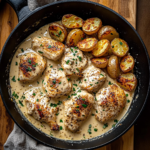
Creamy Garlic Chicken Skillet with Roasted Baby Potatoes
- Prep Time: 15
- Cook Time: 30
- Total Time: 45
- Yield: 4 servings 1x
- Category: Dinner
- Method: Oven-Roasting and Simmering
- Cuisine: Mediterranean-Inspired
- Diet: Halal
Description
A rustic yet refined one-pan dish combining crispy roasted baby potatoes, tender chicken, and a luxurious garlic cream sauce. This halal-friendly, alcohol-free recipe balances comfort and elegance with minimal effort.
Ingredients
1 tablespoon olive oil
1 teaspoon salt
1 teaspoon black pepper
4 garlic cloves, minced
1 (3-pound) chicken breast, cut into 8 pieces
2 cups baby golden potatoes, halved
1 cup heavy cream
2 tablespoons unsalted butter
1 teaspoon dried thyme
1 teaspoon dried parsley
1/2 cup cream cheese (optional)
Fresh pansies for garnish (optional)
Instructions
Preheat oven to 400°F (200°C)
Heat olive oil in a skillet over medium heat
Season chicken with salt, pepper, and half the salt
Sear chicken in skillet for 2-3 minutes per side
Toss potatoes with remaining salt, pepper, and garlic
Roast potatoes in oven for 20 minutes
Reduce oven to 350°F (180°C)
Combine cream, butter, thyme, parsley, and garlic in skillet
Add seared chicken and simmer for 10 minutes
Stir in cream cheese until melted
Add roasted potatoes to the skillet
Garnish with pansies and serve
Notes
Vegan option: Substitute chicken and cream cheese with tofu or cashew cream
Gluten-free: Ensure thyme and parsley are not processed with additives
Storage: Refrigerate leftovers in airtight container for up to 3 days
Alternate thickener: Substitute cream cheese with pureed cooked potatoes
Nutrition
- Serving Size: 1 serving
- Calories: 580
- Sugar: 2g
- Sodium: 900mg
- Fat: 38g
- Saturated Fat: 24g
- Carbohydrates: 30g
- Fiber: 3g
- Protein: 38g
- Cholesterol: 140mg