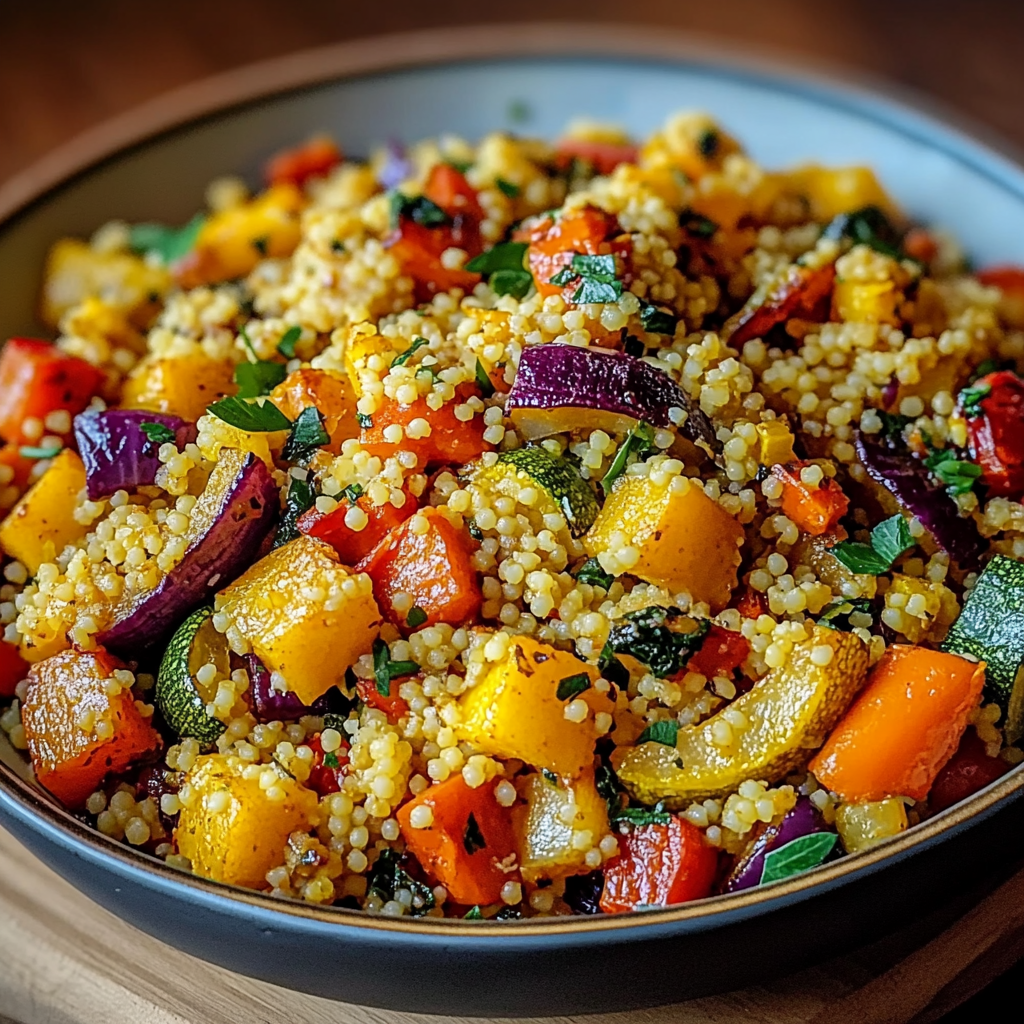
Roasted Vegetable Couscous brings together the earthy sweetness of caramelized seasonal vegetables with the delicate nuttiness of perfectly steamed couscous. This vibrant one-dish meal transforms simple produce into a colorful tapestry of Mediterranean-inspired flavors. Whether you’re seeking a quick weeknight dinner or a nourishing dish for meal prep, the dynamic interplay of roasted textures and herbaceous notes makes this recipe a versatile standout.
What makes this roasted vegetable couscous exceptional is its ability to balance hearty roasted elements with bright, fresh finishes. The combination of roasted peppers and zucchini develops deep caramelized flavors, while the lemon juice and parsley provide a refreshing lift that keeps the dish feeling light. The recipe’s flexibility allows for seasonal adaptability, making it a year-round staple in any health-conscious kitchen.
What is Roasted Vegetable Couscous?
Originating from the sun-drenched regions of North Africa and the Mediterranean, couscous has evolved into a beloved comfort food that adapts beautifully to modern culinary creativity. This version celebrates roasted vegetables as the star ingredient, leveraging their natural sweetness and textural contrasts. Traditional Moroccan techniques meet intuitive flavor pairing, blending warm spices like smoked paprika with the brightness of fresh herbs.
The defining characteristics of this dish lie in its simplicity and balance. Each vegetable component – from charred red onions to tender zucchini – contributes uniquely to the flavor profile. The inferred alchemy of roasting transforms the ingredients, creating deep caramelization that’s both nourishing and satisfying. The addition of feta cheese (optional) introduces a perfect salty counterpoint to the vegetables’ natural sweetness, while lemon juice adds vibrant acidity that dances across the palate.
Reasons to Try Roasted Vegetable Couscous
This dish unlocks an array of culinary benefits for the discerning home cook. First and foremost, it exemplifies one-pot cooking at its finest – requiring minimal cleanup while delivering maximum flavor complexity. The roasted vegetables act as a natural concentrate of nutrients and taste, making the dish inherently nourishing. For busy weeknights, the entire process takes just 45 minutes, yet tastes like it was laboriously prepared over hours.
Particularly appealing to health-conscious individuals, this recipe offers a satisfying plant-forward meal that accommodates multiple dietary needs. The natural roasting process preserves nutrients while developing rich flavors that rival fried alternatives. Beginners will appreciate the forgiving nature of the recipe; even minor timing variations won’t derail the final result. The dish also works beautifully as a base – feel free to customize with your favorite proteins or embellishments.
Ingredients Needed to Make Roasted Vegetable Couscous
Red bell pepper
Yellow or orange bell pepper
Medium zucchini
Red onion
1 cup cherry tomatoes
1 small eggplant (optional)
1 medium sweet potato (optional)
3 tablespoons olive oil
1 teaspoon dried oregano
1 teaspoon dried thyme
½ teaspoon smoked paprika (optional)
Salt and pepper
1 ½ cups vegetable broth
1 cup couscous
2 tablespoons lemon juice
¼ cup fresh parsley (chopped)
¼ cup feta cheese (crumbled)
2 cloves garlic (optional)
(Ideally use a 2-month-old olive oil for peak flavor. For gluten-free option, use certified gluten-free couscous. Cherry tomatoes can be substituted with grape tomatoes or halved pintos for a heartier bite. Fresh herbs yield better results than dried – although recipe is written for dried, you can use 2 tablespoons fresh)
Instructions to Make Roasted Vegetable Couscous – Step by Step
Step 1: Oven Preparation & Vegetable Prep
Preheat oven to 400°F (200°C) and line a large baking sheet with parchment. This temperature maximizes caramelization while preserving natural vegetable moisture. The parchment ensures easy cleanup and prevents sticking. Choose vegetables at their peak ripeness – vibrant colors indicate better flavor and nutrient density.
Step 2: Uniform Sizing for Even Cooking
Wash and cut vegetables into 1-inch chunks for uniform roasting. Sweet potato pieces should be half the size of other vegetables (½ inch) due to their slower cooking rate. Leaving cherry tomatoes whole preserves their juiciness while coating flavors in their natural skin. Consistent sizing ensures even heat distribution – this is nutritional alchemy in action.
Step 3: Flavor Infusion Through Seasoning
In a large mixing bowl, combine all vegetables (except tomatoes and garlic). Drizzle with olive oil, then add oregano, thyme, paprika, salt, and black pepper. Massage the coating into each piece using your hands or a spatula. Wooden spoons transfer flavors more effectively than plastic, enhancing diffusion of aromatic compounds into the vegetables.
Step 4: Achieving Perfect Roasting Texture
Spread vegetables in single layer for optimal air circulation. If overcrowding occurs (determined when pieces sit touching), use second sheet. Mid-roasting (15 minutes) is critical – add cherry tomatoes here to retain their burst of juiciness. Gentle shaking of the pan promotes even browning through convection currents, creating developing color from multiple angles.
Step 5: couscous Layer for Maximum Absorption
While vegetables roast, bring broth to boil in saucepan. Adding 2-3 pinches of salt directly to liquid enhances grain absorption. Once boiling, quickly mix in couscous. Covering with a tight-fitting lid creates steam pressure that cooks the grains evenly – traditional Moroccan offset cooking method fits here elegantly. Let rest undisturbed to allow steam to complete the cooking process.
Step 6: Flavor Assembly and Final Touches
Fluff couscous gently with fork to separate grains before transferring to serving bowl. Vegetables should be fork-tender with slight charring for flavor depth. Add lemon juice incrementally, tasting as you go – citrus brightens both sweet and savory elements. Parsley is best added fresh at the end to preserve its aromatic oils.
Chef’s Tips for a Perfect Result
- Use extra virgin olive oil with 0.3-0.8% acidity for optimal flavor
- For garlic lovers: sauté 30 seconds first to char slightly before mixing
- Roast in convection mode for 20% faster cooking
- Try caster sugar sprinkled on eggplant before roasting for controlled caramelization
- Use a 600-watt microwave-safe steaming tray for precooked sweet potatoes
- Let rest 5 minutes before tossing – this allows absorption without sogginess
Variations and Substitutions
Vegetarian Luxury Option – Add ¼ cup crumbled goat cheese with caraway for creamy tang
Gluten-Free Alternative – Substitute bulgur wheat or quinoa 1:1 ratio
Low-Carb Version – Replace couscous with cauliflower rice, but increase oil to 5 tbsp
Seasonal Twist – Autumn: 2 cups Brussels sprouts. Summer: ½ cup green beans with 1 onion
Budget Swap – Use bagged frozen chopped vegetables (dried well first) for 40% time savings
How to Serve and Pair
Elevate this dish with small culinary theatrics. Serve in warmed serving bowls for temperature retention. Top with edible flower petals or microgreens for vibrant garnish. Pair with soleមेङ (grilled white fish) or shakshuka for protein-rich balance. The dish pairs beautifully with a crisp Sauvignon Blanc or a tangy goat cheese board.
For family meals, consider creating a lazy Sieve presentation: place couscous in center of platter and build around with individual vegetable components. This interactive style works well for picnics or farm-to-table style dining.
Storage and Reheating
Refrigerator: Store in airtight container for up to 3 days. Add 2 tbsp water before reheating as couscous absorbs available moisture
Freezer: Freeze portioned in silicone bags up to 2 months. Thaw first in fridge to prevent grittiness
Room Temperature: Keep in sealed container for up to 4 hours if fully cooled
Reheating: Optimal in oven at 325°F (160°C) for 15-20 minutes partway under broiler for final browning. Microwave – use 50% power in 30-second intervals to prevent moisture loss
Nutritional Values
- Calories: 450
- Protein: 8g
- Carbohydrates: 55g
- Fat: 22g
- Fiber: 6g
Approximate values
Frequently Asked Questions
Q1: Can I use fresh herbs instead of dried oregano?
Yes, use 2 tablespoons fresh oregano mixed in at final step for more aromatic intensity. Add with lemon juice and parsley for best results.
Q2: How do I know the vegetables are properly roasted?
Look for deep golden edges and tender centers. Sweet potatoes should pierce easily with fork while retaining slight spring in center. Tiny blisters on surface indicate optimal caramelization without burning.
Q3: Vegetables are coming out watery what do I do?
To prevent sogginess, pre-cook sweet potatoes for 5 minutes before mixing with others. Spread fully on sheet, use broiler for final 3-4 minutes. Absorb excess moisture with paper towel before mixing with couscous.
Q4: Can this dish be assembled a day in advance?
Prepare components separately. Roast vegetables and cook couscous up to 24 hours ahead. Toss together only after reheating both elements. This preserves texture and prevents moisture transfer.
Q5: Best way to customize this for a dinner party?
Upgrade with ½ cup toasted slivered almonds (browned in olive oil) and 2 tbsp white balsamic glaze. Serve as main dish with lemon wedges on individual plates for elegant presentation.
Conclusion
Roasted Vegetable Couscous captures the spirit of mindful cooking – where simplicity becomes an art form. This dish invites you to savor both the aroma of roasting vegetables and the textural dance of tender couscous. Like stepping into a sunlight-dappled Moroccan courtyard, each bite offers a perfect balance of warm spices and crisp freshness that lingers satisfyingly on the palate.
The unexpected partner in this culinary marriage is the citrus finish – a few drops of lemon juice transform the dish from comforting to vibrant. When you take your first forkful, the interplay of charred vegetables, fragrant herbs, and citrus-kissed couscous creates a satisfying harmony that reveals new layers with each bite.
Print
Roasted Vegetable Couscous with Vibrant Herbs
- Prep Time: 15
- Cook Time: 30
- Total Time: 45
- Yield: 4 servings 1x
- Category: Dinner
- Method: Roasting, Steaming
- Cuisine: North African/Mediterranean
- Diet: Vegetarian
Description
A Mediterranean-inspired one-dish meal combining caramelized seasonal vegetables with steamed couscous, enhanced by fresh herbs, lemon, and warm spices. This colorful, plant-forward dish is quick to make and delivers a balance of roasted richness and herbal brightness.
Ingredients
1 1/2 cups couscous
4 cups chopped seasonal vegetables (red bell peppers, zucchini, red onion)
1 cup vegetable broth
1 1/2 tablespoons olive oil
1 teaspoon smoked paprika
1 clove minced garlic
Salt and black pepper to taste
Juice of 1 lemon
2 tablespoons chopped fresh parsley
1 teaspoon chopped fresh mint
Optional: 4 ounces crumbled feta cheese
Instructions
Preheat oven to 400°F (200°C)
Toss chopped vegetables with 1 tablespoon olive oil, smoked paprika, garlic, salt, and pepper
Roast in a single layer for 25-30 minutes until caramelized and tender
In a separate pan, combine couscous with 1 1/2 cups vegetable broth, bring to a boil
Reduce heat, cover, and simmer for 5-7 minutes until liquid is absorbed
Fluff couscous with remaining olive oil
Mix roasted veggies into couscous
Stir in lemon juice, chopped herbs, and add optional feta just before serving
Notes
Use halal-certified feta if available or substitute with crumbled goat cheese/paneer
Add chickpeas or lentils for extra protein
Store leftovers in airtight containers for up to 3 days
Adjust oven time depending on vegetable thickness
Nutrition
- Serving Size: 1 cup (serving)
- Calories: 420
- Sugar: 5g
- Sodium: 600mg
- Fat: 14g
- Saturated Fat: 2g
- Carbohydrates: 50g
- Fiber: 5g
- Protein: 10g
- Cholesterol: 30mg