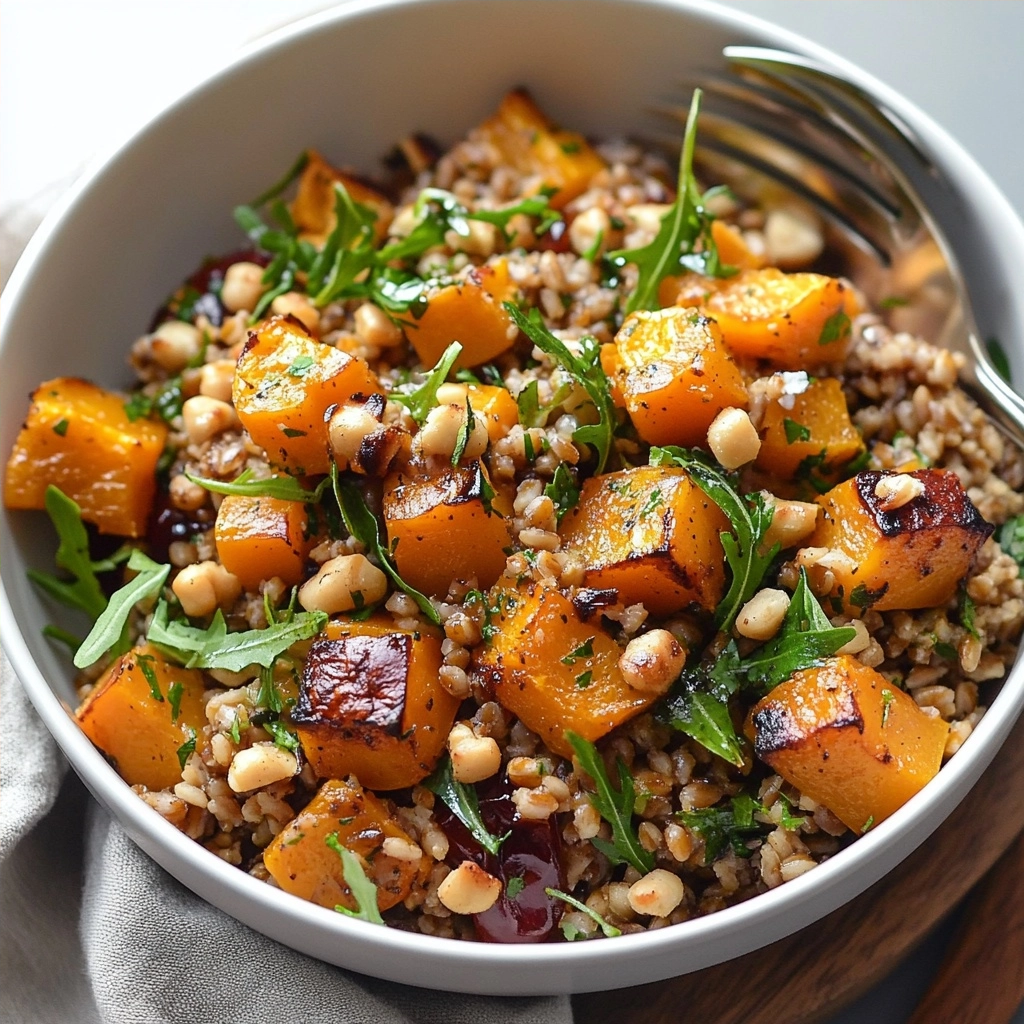
Balsamic Roasted Butternut Squash and Farro Bowls offer a beautiful harmony of earthy grains, caramelized vegetables, and vibrant toppings. This nourishing dish brings together the natural sweetness of oven-roasted squash with the chewy texture of farro, creating a meal that feels both comforting and light. It reflects a mindful approach to eating by relying on whole, plant-based ingredients to fuel your body and busy days.
Preparing a meal like this invites a sense of calm into your kitchen, especially when the aroma of balsamic and maple fills the air. Whether you are looking for a satisfying weeknight dinner or a meal-prep staple, these Balsamic Roasted Butternut Squash and Farro Bowls provide lasting energy and wholesome flavor in every bite.
What is Balsamic Roasted Butternut Squash and Farro Bowls?
This recipe is a celebration of seasonal bounty, pairing roasted root vegetables with ancient grains. The dish centers on butternut squash and red onion tossed in a glaze of balsamic vinegar and olive oil, which deepens their natural sugars while roasting. Combined with hearty farro, protein-rich chickpeas, and a bright maple mustard dressing, it becomes a versatile bowl that works as a main or a colorful side.
Farro, an ancient grain known for its nutty flavor and slightly chewy texture, is a wonderful base for this salad. By adding fresh arugula for a peppery bite and toppings like feta, pepitas, and pomegranate arils, the bowl balances soft and crunchy textures. It draws inspiration from cozy autumn flavors while remaining light enough to enjoy year-round.
Reasons to Try Balsamic Roasted Butternut Squash and Farro Bowls
If you prioritize wellness and efficiency, these bowls are a perfect match for your lifestyle. They take roughly 45 minutes from start to finish, and many of the components—like the grains—can be cooked in advance to save time during your busiest days. The combination of healthy fats, fiber, and protein keeps you feeling full and focused throughout your afternoon.
This dish is also incredibly versatile, making it ideal for families with different preferences. It is easy to customize with whatever produce you have on hand, and because the flavors meld beautifully over time, it actually tastes even better on the second day. Serving this bowl is a simple way to practice self-care through mindful, nutrient-dense ingredients.
Ingredients Needed to Make Balsamic Roasted Butternut Squash and Farro Bowls
For the salad:
- 4 cups butternut squash, cut into 1-inch cubes
- 1/2 red onion, chopped into bite-sized pieces
- 2 tablespoons olive oil
- 1 tablespoon balsamic vinegar
- 1 pinch cayenne pepper
- 3 cups cooked farro (equivalent to roughly 1 cup raw)
- 1 cup canned chickpeas, drained and rinsed
- 4 cups baby arugula
- 1/2 cup feta cheese, crumbled
- 1/4 cup pepitas (shelled pumpkin seeds)
- 1/3 cup pomegranate arils
- 1/4 cup fresh parsley, chopped
For the dressing:
- 1/4 cup extra virgin olive oil
- 2 tablespoons balsamic vinegar
- 1 tablespoon pure maple syrup
- 2 teaspoons grainy mustard
- 1 small garlic clove, minced
- Fine sea salt and cracked black pepper to taste
Instructions to Make Balsamic Roasted Butternut Squash and Farro Bowls – Step by Step
Step 1: Begin by preheating your oven to 425 degrees Fahrenheit. While the oven heats up, spread the cubed butternut squash and chopped red onions across a large rimmed baking sheet. Drizzle with the olive oil and balsamic vinegar, then sprinkle over the cayenne pepper and a generous pinch of sea salt and pepper. Toss everything together until the vegetables are evenly coated.
Step 2: Place the baking sheet in the oven and roast for 20 to 25 minutes. During this time, give the vegetables a gentle stir once to ensure even browning. You are looking for the squash to become fork-tender and the edges of both the squash and onions to turn nicely caramelized. Once done, remove from the oven and set them aside to cool slightly while you assemble the other components.
Step 3: To prepare the dressing, whisk together the olive oil, balsamic vinegar, maple syrup, mustard, and minced garlic in a small glass jar or bowl. Add a pinch of salt and pepper, then whisk until the mixture is emulsified and smooth. This dressing balances the earthiness of the squash with a bright, tangy sweetness that brings the whole dish alive.
Step 4: Finally, assemble the salad by placing the cooked farro and fresh baby arugula into a large, spacious mixing bowl. Add the roasted squash and onions, followed by the chickpeas, crumbled feta, pepitas, pomegranate arils, and chopped parsley. Pour the dressing over the top and gently toss everything until the greens are coated and the ingredients are well distributed. Serve immediately, or let it sit briefly to allow the flavors to deepen.
Chef’s Tips for a Perfect Result
- Cut the squash into uniform 1-inch cubes to ensure they roast at the same rate and reach the same level of tenderness.
- Do not overcrowd the baking sheet, as the squash will steam rather than roast if there is not enough airflow between pieces.
- To make the farro extra flavorful, cook it in vegetable broth rather than salted water for an added boost of depth.
- If you prefer a softer greens texture, add the arugula to the warm roasted squash just a few minutes before tossing so it wilts slightly.
Variations and Substitutions
- Vegan Option: Simply omit the feta or swap it for a high-quality almond-based feta alternative to keep the dish entirely plant-based.
- Gluten-Free Alternative: Replace the farro with cooked quinoa or brown rice, both of which provide a lovely texture while being naturally gluten-free.
- Budget Swap: If you do not have pomegranate arils, dried cranberries or chopped mission figs make excellent additions for that touch of necessary sweetness.
- Low-Carb Version: Substitute the farro with cauliflower rice for a lighter starch option that fits more easily into carb-conscious meal plans.
How to Serve and Pair
These bowls are best served in wide, shallow stoneware dishes to showcase the vibrant colors of the squash and pomegranate. For a more formal lunch, serve them alongside a cup of ginger and turmeric tea or a light sparkling water with fresh lemon. This dish pairs perfectly with a side of steamed kale or a simple grilled halloumi if you want to feature even more protein.
Storage and Reheating
Refrigerator: Store leftovers in an airtight glass container for up to three days. Keep the arugula separate if possible, as it tends to wilt when stored with the dressing.
Freezer: The roasted squash and cooked farro can be frozen separately for up to two months, though individual components are best stored rather than the full salad.
Reheating: Reheat the squash and farro in a skillet over low heat with a tiny splash of water or oil to prevent drying out. Avoid microwaving the greens, as they will turn mushy.
Nutritional Values
- Calories: 380 per serving
- Protein: 12g
- Carbohydrates: 55g
- Fat: 14g
- Fiber: 9g
Approximate values.
Frequently Asked Questions (FAQ)
Can I substitute the farro with another grain?
You can easily substitute farro with pearl barley, wheat berries, or even spelt, as they share similar nutty profiles and chewy textures.
How do I know when the butternut squash is fully roasted?
The squash is done when it is fork-tender and the edges have developed a deep, golden-brown caramelization, typically after 25 minutes at 425 degrees.
My dressing seems to be separating, what should I do?
This is a common occurrence with vinaigrettes; simply whisk the ingredients vigorously again or shake them in a sealed jar until the oil and vinegar emulsify.
Can I prepare this dish the night before?
You can definitely prepare the roasted vegetables, the cooked farro, and the dressing in advance, keeping them stored separately in the refrigerator until you are ready to assemble the bowls.
What is the best way to customize this bowl for a protein-heavy diet?
You can easily increase the protein content by adding grilled tofu, pan-seared tempeh, or a soft-boiled egg to the top of the bowl before serving.
Conclusion
Balsamic Roasted Butternut Squash and Farro Bowls bring a wonderful balance of nourishment and culinary joy to any table. By leaning on fresh, seasonal ingredients and simple roasting techniques, you can create a meal that truly supports your well-being. Treat yourself to these vibrant, satisfying flavors and enjoy the peaceful energy that comes from a homemade, mindful dinner.
Print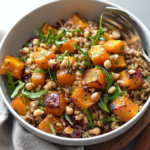
Balsamic Roasted Butternut Squash and Farro Bowls
- Prep Time: 15
- Cook Time: 30
- Total Time: 45
- Yield: 4 servings 1x
- Category: Dinner
- Method: Roasting
- Cuisine: Mediterranean Fusion
- Diet: Vegetarian
Description
These vibrant bowls feature a harmonious blend of caramelized, balsamic-glazed butternut squash and red onion paired with nutty farro and protein-rich chickpeas. Topped with peppery arugula, salty feta, crunchy pepitas, and sweet pomegranate arils, this dish is a nourishing, plant-forward meal perfect for meal prep or a cozy dinner. The light maple-mustard dressing ties all the flavors together for a balanced, satisfying experience in every bite.
Ingredients
4 cups butternut squash, 1-inch cubed
1/2 red onion, chopped
2 tablespoons olive oil
1 tablespoon balsamic vinegar
1 pinch cayenne pepper
3 cups cooked farro
1 cup chickpeas, rinsed
4 cups baby arugula
1/2 cup feta cheese, crumbled
1/4 cup pepitas
1/4 cup pomegranate arils
For the dressing: 2 tbsp olive oil, 1 tbsp balsamic vinegar, 1 tsp maple syrup, 1 tsp Dijon mustard
Instructions
Preheat oven to 400°F (200°C).
Toss butternut squash and red onion with 2 tablespoons olive oil, 1 tablespoon balsamic vinegar, cayenne, salt, and pepper on a baking sheet.
Roast for 25-30 minutes until tender and caramelized.
Prepare the dressing by whisking olive oil, balsamic vinegar, maple syrup, and Dijon mustard in a small bowl.
In a large bowl, combine the cooked farro, roasted vegetables, and chickpeas.
Fold in the fresh arugula just before serving.
Divide into bowls and garnish with crumbled feta, pepitas, and pomegranate arils.
Drizzle with the prepared dressing and serve.
Notes
Farro can be cooked ahead of time to save effort. Feel free to substitute feta with goat cheese if preferred. Keep the dressing separate until serving to keep the arugula fresh.
Nutrition
- Serving Size: 1 bowl
- Calories: 385
- Sugar: 8g
- Sodium: 320mg
- Fat: 14g
- Saturated Fat: 4g
- Carbohydrates: 52g
- Fiber: 9g
- Protein: 12g
- Cholesterol: 15mg