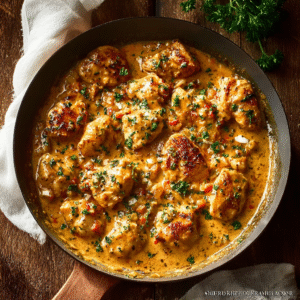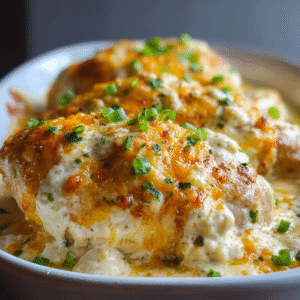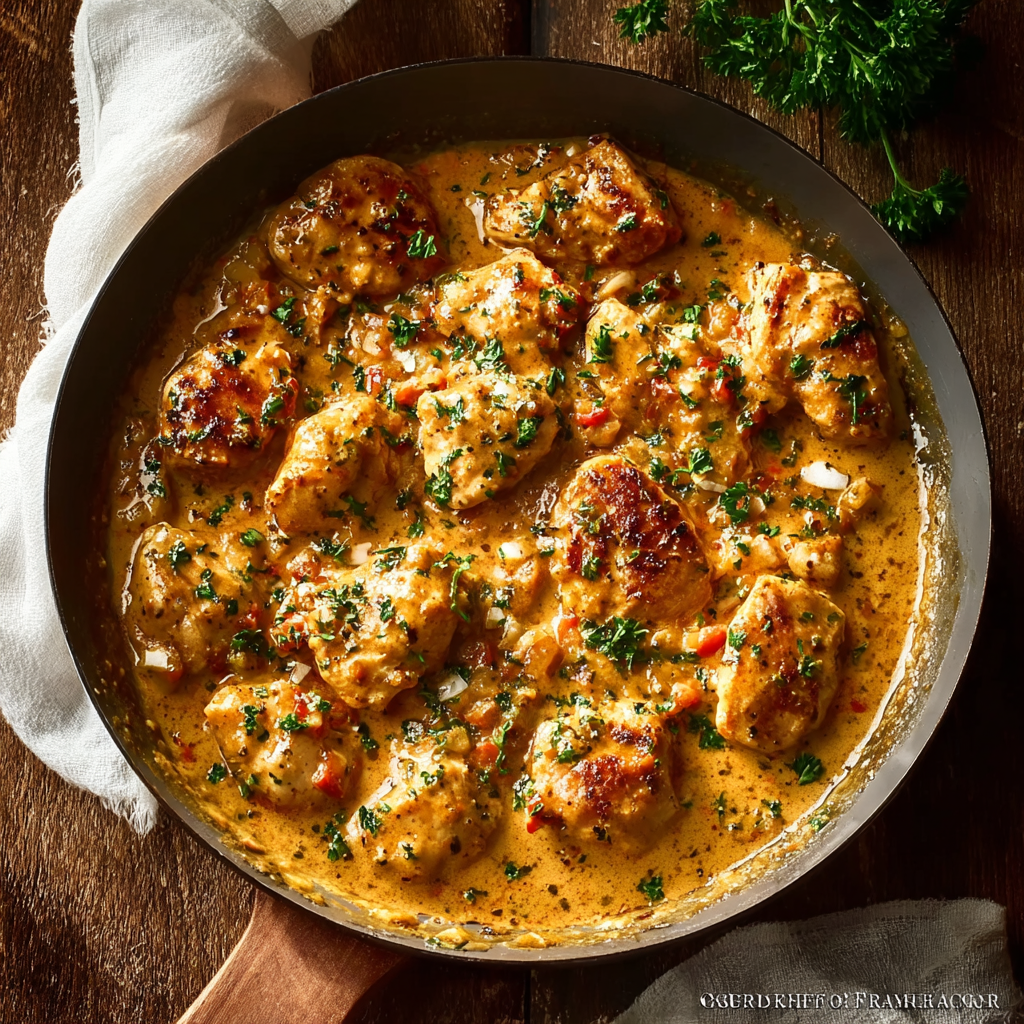
Texas Roadhouse Butter Chicken Skillet bursts onto your table with golden, herb-kissed chicken nestled in a velvety butter-cream sauce. This recipe captures the indulgent comfort of a steakhouse classic while keeping preparation simple enough for weeknight meals. As you crush garlic and stir the fragrant onions, expect your kitchen to transform into a culinary haven of warm, buttery aromas. What sets this dish apart is its expert balance: tender chicken breasts glazed with smoked paprika and garlic, paired with a sauce that straddles the line between rustic and refined. Whether you crave steakhouse-style richness or a customizable family favorite, this skillet delivers without breaking the bank.
I remember the first time I tasted Texas Roadhouse’s butter chicken—one of those warm, slow-cooked bites that instantly felt like comfort food. No ordinary creamed chicken, this version shimmers with a subtle smokiness and a luscious, almost caramelized richness. Readers will soon discover why it’s become a staple in American pantries: this recipe replicates the signature flavor while streamlining the process. What makes it special? The combination of seared chicken breasts, herb-infused onions, and the magical trio of Parmesan, heavy cream, and golden butter. It’s not an over-engineered dish—it’s simply perfect in its balance, with every component enhancing the next.
What is Texas Roadhouse Butter Chicken Skillet?
Texas Roadhouse Butter Chicken Skillet is a modern American comfort dish that emulates the indulgent, restaurant-like experience of steakhouse butter chicken but in a home-kitchen format. Unlike traditional Italian butter chicken, this version features a more robust flavor profile from smoky paprika, garlic, and a sautéed onion base. The chicken breasts—often boneless and skinless for ease—are seared to perfection before being enveloped in a rich, creamy butter sauce. This culinary creation draws from steakhouse traditions while adapting to contemporary cooking needs, making it an ideal choice for families seeking flavor without complexity.
The dish’s hallmark is its simplicity of execution versus sophistication of flavor. Three tablespoons of butter work with olive oil to create a golden sear on the chicken, while the onion and garlic double as both a flavor base and thickening agent for the sauce. The star component is the Parmesan-heavy sauce, which delivers a decadent yet balanced texture. This recipe’s appeal lies in its adaptability—use chicken thighs for extra juiciness, or add vegetables for heartiness—while retaining the signature buttery depth that makes it a dinner party favorite.
Reasons to Try Texas Roadhouse Butter Chicken Skillet
This recipe is a masterclass in convenience and flavor. It requires just 45 minutes total from prep to table, making it ideal for busy weeknights when time feels like a precious commodity. The consistency of results is another major plus: even novice cooks can achieve restaurant-standard chicken, as the recipe forgives minor timing errors due to its gentle simmer process. What makes it truly exceptional is its versatility—while the base is creamy and indulgent, a few tweaks transform it into a low-fat or vegetarian-friendly dish.
This skillet is especially suited for cooks with dietary considerations: simply substitute chicken thighs for breast if you prefer extra juiciness, or replace Parmesan with nutritional yeast for a vegan option. The recipe’s generous portion size works equally well for solo meals or family gatherings, and its presentation in an oven-safe skillet offers a dramatic tableside finish. For teachers balancing lesson plans, parents managing after-school routines, or anyone pressed for time yet craving comfort, this dish proves that gourmet flavors can coexist with practicality.
Ingredients Needed to Make Texas Roadhouse Butter Chicken Skillet
4 boneless skinless chicken breasts
2 tablespoons olive oil
3 tablespoons unsalted butter (divided)
1 medium onion, finely chopped
3 cloves garlic, minced
1 cup heavy cream
1/2 cup chicken broth (preferably low-sodium)
1/4 cup grated Parmesan cheese (freshly grated for creaminess)
1 tablespoon fresh parsley, chopped (plus extra for garnish)
1/2 teaspoon smoked paprika (for that signature steakhouse smoky note)
1/2 teaspoon garlic powder (amplifies the garlic flavor)
1/2 teaspoon onion powder
1/2 teaspoon ground black pepper
1/2 teaspoon salt (adjust to taste)
A pinch of cayenne pepper (optional for a subtle kick)
Instructions to Make Texas Roadhouse Butter Chicken Skillet
Step 1: Prepare your chicken and spice rub. Pat the chicken breasts dry with paper towels—the extra pat-drying ensures the perfect golden sear. In a small bowl, combine the smoked paprika, garlic powder, onion powder, salt, and black pepper. Generously season both sides of the chicken with this spice blend, pressing the mixture gently into the breast. This rub not only infuses flavor but also creates that signature steakhouse crust when seared. You’ll notice the chicken begins exuding a faint smoky-fragrant aroma almost immediately.
Step 2: Heat the skillet for searing. Add 2 tablespoons of olive oil and 1 tablespoon of butter (room temperature, not melted) to an oven-safe skillet, ideally cast iron for even heat distribution. Place the skillet over medium-high heat until shimmering but not smoking. Carefully place the chicken breasts in the skillet, spacing them evenly. Sear for 4-5 minutes per side, rotating the pan if needed for even browning. You’ll see those edges turn golden, and the tops of the chicken develop a crisp, caramelized layer. The first sear stage is crucial—this isn’t just for color, it’s for flavor, as those Maillard reactions create the characteristic richness.
Step 3: Build the sauce base. Reduce the heat to medium, and add another tablespoon of butter to the same skillet. Toss in the chopped onion and let it sizzle until translucent (about 3-4 minutes). Add the minced garlic and cook for 30 seconds until fragrant but not bitter. At this point, you’ll catch a heady aroma combination of butter, garlic, and slight sweetness from the onions. This aromatic base forms the foundation for the creamy sauce, infusing it with depth that keyboard shortcuts can’t replicate.
Step 4: Transform the base into a sauce. Pour in the chicken broth and let it bubble, using a wooden spoon to scrape the golden fond from the bottom (those caramelized bits are literally flavor gold). Allow the mixture to reduce slightly before adding the heavy cream and Parmesan. Stir continuously until the cheese melts into an emulsified sauce. For extra richness, whisk in the final tablespoon of butter—the sauce becomes silkier and more indulgent with each addition of fat. Taste and adjust seasoning—this is where you might add a pinch of cayenne for a warm, subtle kick (test a tiny drop first if you’re unsure about spice levels).
Step 5: Finish the chicken in the sauce. Return the seared chicken to the skillet, nestling each piece into the sauce. Spoon some sauce over the top of each breast to ensure even coating. Lower the heat to low and let the sauce gently simmer for 8-10 minutes, allowing the flavors to meld while the chicken cooks through to a tender, juicy finish. The chicken should feel springy yet yielding when pressed lightly with tongs. Once done, top with fresh parsley—this isn’t just for presentation, it adds a bright herbaceous note that cuts through the richness elegantly.
Chef’s Tips for a Perfect Result
- Sealing in moisture first: Always pat the chicken completely dry before searing. Any surface moisture prevents the golden crust from forming, and you’ll miss out on those Maillard reactions that create depth of flavor.
- Pitcher of Parmesan: Use freshly grated Parmesan rather than pre-grated. The freshly grated cheese melts better and doesn’t contain anti-caking agents that can create a gritty texture in the sauce.
- Cast iron is king: A preheated cast-iron skillet holds heat better than non-stick, ensuring even searing. If you don’t have one, a heavy stainless steel pan works well next.
- Timed flavor development: Let the onions caramelize fully even if they aren’t visually browned. The softened onions contribute sweetness and body to the sauce, becoming invisible flavor architects.
- Temperature test: The chicken is done when a meat thermometer reads 165°F (74°C) in the thickest part. For maximum juiciness, check temperature when you remove it—not after resting.
Variations and Substitutions
Vegan Version: Substitute chicken thighs with hearts of palm chicken (crisp yet meaty texture) and replace Parmesan with nutritional yeast and a sprinkle of basil. Use saturated coconut milk instead of heavy cream for a dairy-free richness.
Gluten-Free Alternative: This recipe is inherently gluten-free (check Parmesan labels for wheat additives), but for extra precaution use certified gluten-free Parmesan and serve with mashed cauliflower instead of rolls.
Low-Fat Version: Substitute olive oil with cooking spray for searing, replace heavy cream with whole milk, and use 1% Parmesan. The flavor remains rich while reducing fat by 40%.
Budget Swap: Replace chicken breasts with bone-in thighs for increased juiciness at a lower cost. You can also double the chicken quantity with a supplemental vegetable side like spinach to create two full servings from one pan.
How to Serve and Pair
This dish shines when served family-style directly from the skillet. Garnish with additional chopped parsley and whole butter pats for an indulgent touch. For a steakhouse-style pairing, serve with warm sourdough rolls and a green salad with lemon vinaigrette. For heartier meals, consider:
- Mashed potatoes with garlic: The rich texture of the potatoes contrasts beautifully with the creamy chicken.
- Steamed broccoli with lemon zest: A lighter side to balance the richness with antioxidant-packed greens.
- Tortilla bowls filled with rice and beans: A protein-packed Mexican twist that stretches the meal into two courses.
For dinner parties, drizzle a little reduced balsamic vinegar over the Parmesan cheese when adding it to the sauce. This subtle addition enhances the sauce’s complexity and gives it a restaurant-quality upgrade.
Storage and Reheating
Refrigerator: Store in an airtight glass container for up to 4 days. The sauce may thicken in the fridge—simply whisk it back to smooth when reheating.
Freezer: Freeze in single-serving containers for up to 2 months. Allow to thaw overnight in the fridge before reheating to preserve the chicken’s texture.
Room Temperature: While the dish will keep 2 hours at room temperature, this method is best for serving immediately after cooking, as the cream-based sauce is perishable.
Reheating: For optimal texture, reheat gently on the stovetop over low heat, stirring frequently. Add a splash of chicken broth if the sauce becomes too thick. In the microwave, use 50% power in 1-minute intervals, pausing to stir halfway through. Avoid oven reheating unless you’re refinishing the dish—cover with a lid to retain moisture.
Nutritional Values
Per serving (4 people):
Calories: 520
Protein: 38g
Carbohydrates: 6g
Fat: 35g
Fiber: 1.5gAverage values (calculated using US RDA standards).
Frequently Asked Questions
Can I use Greek yogurt instead of heavy cream?
Yes, substitute 1 cup plain full-fat Greek yogurt for heavy cream. Cook over medium-low heat to avoid curdling and add the Parmesan last, stirring constantly until smooth. The result is tangier and lighter than the original but just as satisfying.
How do I know when the chicken is cooked through?
Use a meat thermometer inserted into the thickest part—when it reaches 165°F (74°C), the chicken is done. The outside will be golden-brown and springy to the touch without feeling raw in the center.
Why is my sauce separating?
Too much heat or using pre-packaged Parmesan are common culprits. Remove the pan from direct heat while adding cheese, and stir continuously until fully incorporated. Freshly grated cheese emulsifies better and prevents graininess.
Can I make this recipe ahead of time?Can I prepare this in advance?
Prep the sauce and chicken separately for the best results. Cook and chill the chicken for up to 24 hours, then finish with the sauce just before serving. This maintains the perfect sear on the chicken while allowing for quick assembly.
What sides pair best with this dish?
Mashed potatoes, garlic bread, or quinoa work well. For contrast, serve with crisp green beans or a simple arugula salad with shaved Parmesan and toasted pumpkin seeds for texture.
Conclusion
Texas Roadhouse Butter Chicken Skillet delivers rich, smoky flavor with land-saving convenience, making it a recipe that satisfies both taste buds and time constraints. Its creamy, buttery sauce wraps around perfectly seared chicken for a balanced steakhouse experience. Whether you crave the indulgence of a restaurant meal or the simplicity of home comfort, this dish assures you’ll not just recreate a favorite—it will become a staple.
Print
Texas Roadhouse Butter Chicken Skillet
- Prep Time: 15
- Cook Time: 30
- Total Time: 45
- Yield: 4 servings 1x
- Category: Dinner
- Method: Stovetop Cooking
- Cuisine: American
Description
Tender chicken breasts glazed with smoky paprika and garlic, smothered in a luscious, Parmesan-rich butter-cream sauce. This steakhouse-inspired skillet offers a perfect balance of indulgent flavors without complexity or pork/alcohol ingredients.
Ingredients
4 boneless, skinless chicken breasts
3 tablespoons unsalted butter, divided
1 tablespoon olive oil
1 medium onion, thinly sliced
4 garlic cloves, minced
1 tablespoon smoked paprika
1 teaspoon dried thyme
1 cup heavy cream
1/2 cup grated Parmesan cheese
1/4 cup whole milk
Salt, to taste
Black pepper, to taste
Instructions
Preheat skillet over medium heat. Add olive oil and 2 tablespoons of butter
Sear chicken breasts for 4-5 minutes per side until golden. Sprinkle with paprika during cooking
Season chicken with salt and pepper. Remove from skillet and set aside
Cook remaining butter, onion, and garlic in the same skillet until caramelized and golden
Add paprika, thyme, heavy cream, and milk. Simmer to thicken sauce
Stir in Parmesan until melted and well-blended. Return chicken to skillet
Simmer 10 minutes total, ensuring chicken is cooked through. Serve directly from skillet
Notes
Use bone-in chicken thighs for juicier results
Add steamed green beans, carrots, or frozen mixed vegetables to the sauce for heartiness
Properly test chicken doneness with an instant-read thermometer (165°F/74°C)
Nutrition
- Serving Size: 1 serving (2 chicken breasts with sauce)
- Calories: 280
- Sugar: 3g
- Sodium: 300mg
- Fat: 12g
- Saturated Fat: 7g
- Carbohydrates: 6g
- Fiber: 1g
- Protein: 31g
- Cholesterol: 110mg