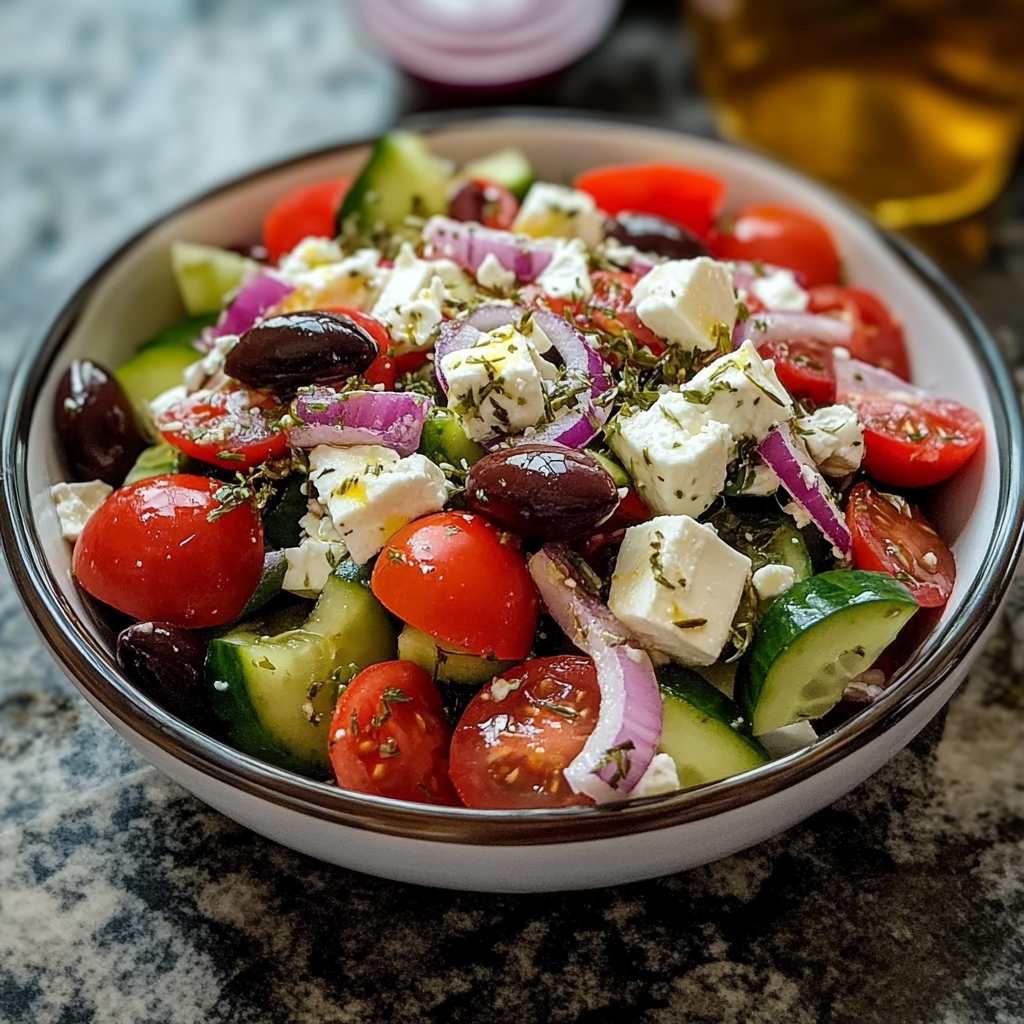
Classic Greek Salad
Classic Greek salad is a vibrant celebration of fresh, simple ingredients, bursting with the sunshine flavors of the Mediterranean. This isn’t just a side dish; it’s a refreshing journey to the Aegean coast with every bite. Imagine crisp cucumbers, juicy tomatoes, sharp red onions, and briny Kalamata olives, all crowned with salty feta cheese. The beauty of this salad lies in its pure, unadulterated flavors, enhanced by a simple yet potent dressing that brings everything harmoniously together. It’s a dish that speaks of warmth, health, and simple joys, perfect for those moments when you want to nourish your body and soul.
This classic Greek salad recipe, inspired by the heart of traditional Hellenic cuisine, embodies a philosophy of mindful eating. It’s about honoring the inherent goodness of each component, allowing their natural brightness to shine. Whether you’re seeking a light lunch, a beautiful side for a gathering, or simply a way to bring a taste of Mediterranean wellness into your kitchen, this salad is a perfect companion. Its accessibility and straightforward preparation make it a go-to for busy weeknights, while its stunning presentation ensures it will impress at any table, reflecting a commitment to both health and culinary delight.
What is Classic Greek Salad?
A true Classic Greek salad, known as Horiatiki Salata in Greek, translates to “village salad.” It’s a staple in Greek homes and tavernas, representing the essence of a rustic, farm-fresh meal. Unlike many other salads, it traditionally doesn’t include lettuce. Instead, it features hearty, robust ingredients that hold up beautifully together, creating a satisfying and incredibly flavorful experience. Its authenticity lies in its simplicity, relying on the quality of its components to create a dish that is both grounding and invigorating.
The core of a Horiatiki Salata is its harmonious blend of textures and tastes. You’ll find the cool crispness of cucumber, the sweet burst of ripe tomatoes, the slight bite of green bell pepper, the pungent kick of red onion, and the salty, briny depth of Kalamata olives. Anchoring it all is generous chunks or crumbles of authentic feta cheese, ideally one packed in brine for peak creaminess and flavor. This combination, enhanced by a light dressing of quality extra-virgin olive oil and red wine vinegar, celebrates the vibrant culinary heritage of Greece, offering a nourishing and delicious testament to fresh, wholesome ingredients.
Reasons to Try Classic Greek Salad
This Classic Greek salad is a pure delight for anyone seeking vibrant health and simple elegance on their plate. It’s incredibly refreshing, making it your ideal companion on a warm afternoon or as a bright accompaniment to grilled dishes. The preparation is wonderfully quick, typically taking just about 15 minutes from start to finish, which is a blessing for busy schedules. Its beautiful medley of colors is not only appealing to the eye but also indicates a rich diversity of nutrients, supporting overall wellness and energy throughout the day.
This salad is perfect for everyone, from beginner cooks to seasoned home chefs. It requires no culinary expertise, just a loving approach to combining fresh ingredients. It’s incredibly versatile, fitting seamlessly into any meal, from a light lunch to a starring role at a summer barbecue or a family dinner. Embracing this salad is embracing a moment of calm and nourishment, a simple act of self-care that brings a taste of the Mediterranean’s healthy lifestyle right into your kitchen, fostering balance and joy.
Ingredients Needed to Make Classic Greek Salad
For the Dressing:
- ¼ cup extra-virgin olive oil (choose a good quality one for best flavor)
- 3 tablespoons red wine vinegar
- 1 garlic clove, minced (freshly minced adds a wonderful zing)
- ½ teaspoon dried oregano, plus extra for sprinkling (Greek oregano is lovely if you have it)
- ¼ teaspoon Dijon mustard (enhances the emulsion and adds a subtle kick)
- ¼ teaspoon sea salt (adjust to your preference)
- Freshly ground black pepper, to taste
For the Salad:
- 1 English cucumber, cut lengthwise, seeded, and sliced ¼-inch thick (seedless varieties work beautifully)
- 1 green bell pepper, chopped into 1-inch pieces (adds a lovely crispness and color)
- 2 cups cherry tomatoes, halved (sun-ripened ones are ideal for sweetness)
- 5 ounces feta cheese, cut into ½ inch cubes (feta in brine is best for authentic texture and taste)
- ⅓ cup thinly sliced red onion (soak in cold water for 10 minutes to mellow its bite if desired)
- ⅓ cup pitted Kalamata olives (these bring that classic briny, fruity flavor)
- ⅓ cup fresh mint leaves, for garnish (adds an unexpected, delightful freshness)
Instructions to Make Classic Greek Salad – Step by Step
Step 1: Prepare the Dressing
In a tranquil moment, find a small bowl and begin by whisking together the quality extra-virgin olive oil and the bright red wine vinegar. Add the finely minced garlic clove, giving it a gentle stir to release its fragrant aroma. Next, incorporate the dried oregano, a touch of Dijon mustard for emulsification, and the sea salt. Finish with several generous grinds of fresh black pepper. Whisk these ingredients together with intention until the mixture looks slightly thickened, well-combined, and ready to infuse the salad with its delicious essence.
Step 2: Assemble the Salad Base
Now, select a large, shallow platter – something beautiful that will showcase the salad’s vibrant colors. Artfully arrange the prepared English cucumber slices, ensuring they form an inviting base. Scatter the chopped green bell pepper pieces evenly over the cucumber, followed by the sweet, halved cherry tomatoes. This layering creates a visually stunning foundation, a colorful prelude to the delightful flavors that await.
Step 3: Add the Finishing Touches
Gently distribute the creamy cubes of feta cheese over the bed of vegetables. The salty, tangy feta is a true hallmark of this salad, so be generous with its placement. Next, artfully scatter the thinly sliced red onion rings and the briny Kalamata olives across the platter. These additions bring layers of flavor and texture, creating a captivating visual mosaic that is as pleasing to the eye as it is to the palate.
Step 4: Dress and Serve with Joy
Taking your prepared dressing, drizzle it evenly over the entire platter. The goal is a light, glistening coating, not to drown the ingredients. You can very gently toss the salad if you wish, just enough to ensure everything is kissed by the dressing without breaking apart the delicate feta. Finally, sprinkle a few extra pinches of dried oregano over the top for an aromatic flourish. Garnish with the fresh mint leaves, which provide a burst of unexpected coolness and perfume. Season with additional salt or pepper as needed, and serve this masterpiece immediately, allowing its fresh, invigorating flavors to be savored.
Chef’s Tips for a Perfect Result
- Always use the freshest, ripest produce you can find; the quality of your ingredients directly translates to the flavor of your salad.
- Opt for feta cheese packed in brine; it offers a superior creamy texture and a more intense, authentic salty flavor compared to dry-packed varieties.
- Gently seed the cucumber before slicing to remove excess water, ensuring a crispier salad that isn’t watered down by the dressing.
- Don’t over-toss the salad, especially once the feta is added; a light, gentle mix ensures the ingredients maintain their integrity and visual appeal.
- Consider soaking thinly sliced red onion in ice-cold water for 10-15 minutes before adding to the salad; this helps to mellow its sharp bite to a more subtle sweetness.
- A good quality extra-virgin olive oil is your best friend here; its fruity notes will significantly elevate the overall flavor profile of the dressing.
Variations and Substitutions
Vegan Option
- What to change: Omit the feta cheese.
- Suggested substitute: Use a high-quality vegan feta alternative, or for a different texture, add roasted chickpeas for protein and crunch. Marinated tofu cubes can also work.
- How it impacts flavor or texture: You’ll lose the characteristic salty tang of feta, but a good vegan feta can provide a similar textural element. Roasted chickpeas add a hearty, nutty flavor and satisfying bite.
Gluten-Free Alternative
- This recipe is naturally gluten-free! The ingredients are all free from gluten, making it a safe and delicious choice for those avoiding gluten.
Low-Carb Version
- What to change: Be mindful of onion and olive quantities.
- Suggested substitute: Keep the other vegetables as is. For a bit more substance, add a handful of fresh spinach or arugula.
- How it impacts flavor or texture: Mostly the same, with arugula adding a slight peppery note. The carb count remains very low and is perfectly aligned with a low-carb lifestyle.
Budget Swap
- What to change: Substitute some of the more expensive ingredients.
- Suggested substitute: Use regular block feta (often more affordable) instead of brine-packed feta if necessary. Use a standard green bell pepper or even a yellow one if red onions are pricey. Standard olives can also be used if Kalamata are not budget-friendly.
- How it impacts flavor or texture: While brine-packed feta is superior, block feta still provides that essential cheesy element. Standard olives will offer a different brininess but are still delicious.
How to Serve and Pair
This Classic Greek salad is wonderfully versatile. Serve it as a light and refreshing lunch on its own, perhaps with a warm piece of crusty bread for dipping into the flavorful dressing. It’s an ideal accompaniment to grilled lamb skewers, baked chicken, or pan-seared fish, bringing a bright, herbaceous contrast. For a delightful vegetarian main, pair it with some warm hummus and pita bread or falafel. Presentation is key to elevating this simple dish; arrange the ingredients thoughtfully on a large platter for a stunning visual impact. It’s also a perfect addition to any mezze platter or a potluck spread, showcasing the vibrant flavors of the Mediterranean and offering a healthy, wholesome option for everyone to enjoy.
Storage and Reheating
Refrigerator
- Store leftover Classic Greek salad in an airtight container. It’s best consumed within 1-2 days for optimal freshness and texture. The vegetables will soften over time, and the dressing can make the components a bit soggy if left too long.
Freezer
- Freezing is not recommended for Classic Greek salad. The high water content in the vegetables and the texture of the feta cheese will not hold up well to freezing and thawing, resulting in a mushy and unappealing salad.
Room Temperature
- Classic Greek salad is best served immediately after dressing. While it can sit at room temperature for about an hour before serving, prolonged exposure can cause the vegetables to lose their crispness and the feta to become too soft.
Reheating
- This salad is meant to be served cold or at room temperature, so reheating is generally not necessary or advised. If you have leftovers, simply bring them to room temperature if they’ve been refrigerated, or briefly chill them again before serving.
Nutritional Values
- Calories: Approximately 250-300 per serving
- Protein: 7-10 grams
- Carbohydrates: 10-15 grams
- Fat: 18-25 grams
- Fiber: 3-5 grams
Approximate values.
Frequently Asked Questions (FAQ)
Can I substitute the feta cheese in a classic Greek salad?
Yes, you can substitute feta cheese with other firm, salty cheeses like Halloumi (which can be grilled) or goat cheese for a different creamy tang. Vegan feta alternatives are also available for a dairy-free option.
How do I know when my classic Greek salad is ready to serve?
A classic Greek salad is ready to serve as soon as it is assembled and dressed. The key is to use fresh, crisp vegetables and dress it just before serving to maintain the best texture and vibrant flavors.
What if my classic Greek salad turns out too watery?
To prevent a watery salad, be sure to seed the cucumber before slicing and drain any excess liquid from canned olives. Patting dry any ingredients that might hold extra moisture can also help. Serve the dressing on the side if you plan to store it, and only dress individual portions right before eating.
Can I prepare the ingredients for classic Greek salad ahead of time?
Yes, you can chop all the vegetables and prepare the dressing in advance. Store them separately in airtight containers in the refrigerator. Combine and dress the salad just before you plan to serve it to keep it fresh and crisp.
What’s the best way to serve or customize a classic Greek salad?
Serve it on a large platter for a beautiful presentation, or pack individual portions for lunch. You can customize it by adding grilled chicken, shrimp, or chickpeas for added protein, or by incorporating different herbs like parsley or dill.
CONCLUSION
This Classic Greek salad is a testament to the beauty of simplicity, packing a refreshing punch of authentic Mediterranean flavors. It’s a dish that nourishes the body and calms the spirit, embodying a mindful approach to eating. Try this recipe to bring a taste of vibrant wellness and joy to your table. The signature combination of crisp vegetables, briny olives, and tangy feta, all tied together with a bright olive oil and vinegar dressing, creates an irresistible culinary experience.
Print
Classic Greek Salad
- Prep Time: 15
- Total Time: 15
- Yield: 4-6 servings 1x
- Category: Salads
- Method: Cold/Mixed
- Cuisine: Greek
- Diet: Vegetarian
Description
A vibrant Mediterranean salad featuring fresh cucumbers, ripe tomatoes, tangy Kalamata olives, sharp red onions, and creamy feta cheese, dressed in olive oil and a halal/non-alcoholic substitute for a refreshing taste of Greece.
Ingredients
2 medium cucumbers, sliced
4 large tomatoes, diced
1 red onion, thinly sliced
1/2 cup Kalamata olives
1/2 cup crumbled feta cheese
2 tablespoons extra-virgin olive oil
1 tablespoon lemon juice (substitute for red wine vinegar)
1 teaspoon dried oregano (optional)
Salt, to taste
Instructions
1. Dice tomatoes and slice cucumbers; place in a large bowl.
2. Thinly slice red onion and let sit for 5-10 minutes to reduce sharpness.
3. Add olives, crumbled feta, and red onion to the bowl.
4. In a small bowl, whisk olive oil, lemon juice, oregano (if using), and salt.
5. Drizzle dressing over the salad; toss gently to combine.
Notes
To soften red onion, let slices rest in a colander.
Replace feta with vegan alternative for dairy-free version.
Store in airtight container for up to 2 days.
Nutrition
- Serving Size: 1 bowl
- Calories: 220
- Sugar: 3g
- Sodium: 800mg
- Fat: 15g
- Saturated Fat: 4g
- Carbohydrates: 10g
- Fiber: 2g
- Protein: 6g
- Cholesterol: 30mg