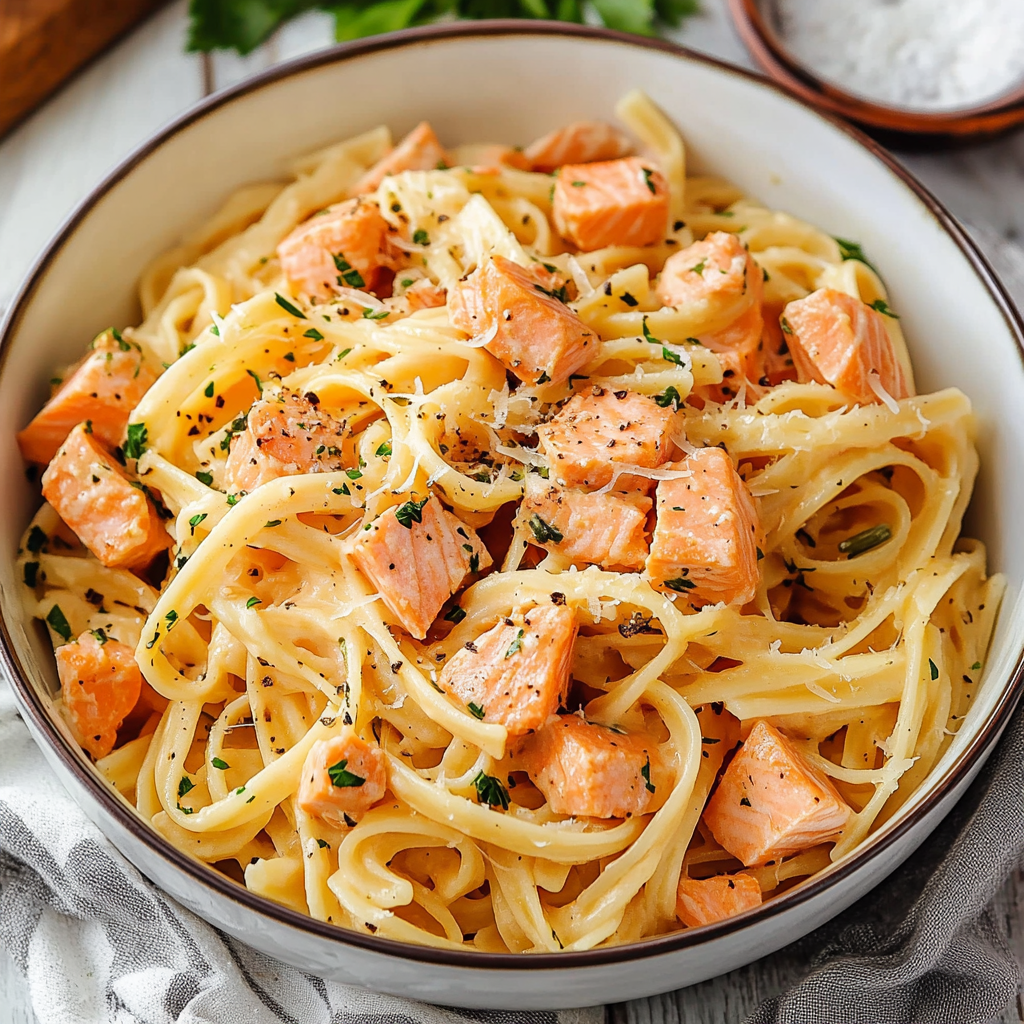
Easy Salmon Pasta Without Cream is a revelation for anyone seeking a rich, satisfying meal without the heaviness of traditional cream sauces. This dish masterfully balances the tender, buttery flakes of perfectly cooked salmon with a light, homemade sauce that shimmers with garlic, herbs, and a hint of warmth from red pepper flakes. What makes this recipe truly special is its simplicity—no need for dairy or complex techniques—and its vibrant, health-conscious heart that celebrates fresh, natural ingredients. Whether you’re craving a quick weeknight dinner or a special treat for two, this pasta dish promises comfort without compromise. Let’s dive into what makes this version of salmon pasta a standout in your recipe rotation.
What is Easy Salmon Pasta Without Cream?
At its core, Easy Salmon Pasta Without Cream is a modern twist on classic creamy seafood pasta dishes. While cream-based sauces often rely on heavy dairy like cream or butter, this version achieves its luscious texture through a clever combination of milk, parmesan, and the natural richness of salmon. The dish traces its inspiration to Mediterranean and North American coastal cuisines, where fresh fish is elevated with simple, bold flavors. Key ingredients like wild-caught salmon, olive oil, and aromatic garlic create a satisfying balance of omega-3s, umami, and subtle heat. The result is a dish that feels indulgent yet refreshing, perfect for health-conscious cooks who refuse to sacrifice taste.
What sets this pasta apart is its ability to feel both rustic and elegant. The salmon isn’t overwhelmed by the sauce but instead lets its natural brininess shine, while the parmesan adds depth without overpowering. This recipe is also inclusive by design—no dairy means it’s naturally vegan-friendly with a few substitutions, and the quick cooktime makes it ideal for modern households.
Reasons to Try Easy Salmon Pasta Without Cream
This dish is a game-changer for several reasons. First, it’s effortless: from pasta boiled to salmon seared in under 25 minutes, it’s a rare recipe that manages to feel both quick and refined. The minimal ingredient list (no pantry-stabilizing cream required) means you can keep the kitchen tidy while still serving something unforgettable. Second, it’s incredibly adaptable—swap the salmon for white fish like cod or add your favorite veggies for a plant-forward variation. Third, it’s packed with nutrients: salmon delivers protein and brain-boosting omega-3s, while milk introduces calcium, and the pasta provides long-lasting energy from complex carbs. Busy parents, health-focused eaters, and even dairy-avoidant cooks will all find a reason to love this dish. It’s the kind of meal that reminds us how good comfort food can be when it aligns with our wellness goals.
What truly sells this recipe is how it defies expectations. Without the usual richness of heavy cream, the flavors feel lighter, almost springlike, yet the depth and heartiness never suffer. It’s a testament to creativity in the kitchen—proving that “easy” and “elegant” can coexist on the plate.
Ingredients Needed to Make Easy Salmon Pasta Without Cream
400g dry pasta (I used rigatoni, but penne or spaghetti work too)
1 lb salmon (skin-on or skinless, wild-caught preferred)
2 tablespoons olive oil (for searing and sauce)
3 cloves garlic, finely chopped (add to the pan after sautéing onions)
½ cup onions, diced (soft and translucent when cooked)
⅓ cup milk (whole or low-fat, optional if you want a lighter profile)
2 tablespoons unsalted butter (for a touch of richness)
1 cup grated parmesan cheese (freshly grated is ideal)
¼ teaspoon red pepper flakes (adjust to taste)
1 teaspoon dried parsley (or fresh, for freshness)
Salt and black pepper, to taste
1 cup reserved pasta water (to create the sauce’s silky texture)
Note: Prep all ingredients before starting—this recipe moves quickly once the salmon hits the pan!
Instructions to Make Easy Salmon Pasta Without Cream – Step by Step
Step 1: Perfect the Pasta
Begin by bringing a large pot of salted water to a boil. Generously salt the water—you want it to taste like the ocean. Add the pasta and cook it to al dente, checking a minute earlier than the package instructions. This prevents overcooking, especially since the pasta will sit in the sauce later. While it cooks, gather your ingredients and prep the salmon. Reserve 1 cup of the pasta water once it’s drained. This starchy water is the secret to a silky sauce that clings to the pasta like a dream.
Tip: The salt in the water is crucial. Skip it, and your dish will fall flat—don’t skimp!
Step 2: Cook the Salmon
Pat the salmon fillets dry with paper towels to ensure an even sear. Season both sides with salt, pepper, and a quick sprinkle of parsley for brightness. Heat the olive oil in a large skillet over medium-high heat until shimmering. When the oil is hot but not smoking, add the salmon skin-side up (if skin-on). Let it cook undisturbed for 3–4 minutes until a golden crust forms. Flip gently with a spatula and cook for another 2–3 minutes, depending on the thickness of your fish. The center should be just barely pink, as the residual heat will finish cooking it. Remove the salmon to a plate and let it rest for a few minutes before gently flaking it into bite-sized pieces.
Pro tip: For flakier salmon, chill the fillet in the fridge for 10 minutes before searing—it firms up the texture.
Step 3: Build the Sauce
In the same skillet (no need to clean it—those salmon drippings add flavor!), reduce the heat to medium. Add the diced onions and cook them for 1 minute until they begin to soften. Stir in the butter to melt it into the pan, then toss in the garlic, parsley, and red pepper flakes. Sauté for 30 seconds, just until fragrant. Add about 20% of the flaked salmon, black pepper, and red pepper flakes (adjust the spice level to your taste). Stir gently to combine, ensuring the fish isn’t crushed. The salmon’s natural oils will begin to blend with the aromatics, creating a base for the sauce.
Pour in the milk and half the reserved pasta water, stirring to deglaze the pan and dissolve the parmesan cheese. Simmer for 1 minute or until the sauce reduces slightly and thickens. The starchy pasta water will do most of the work here, creating a glossy, clingy emulsion without needing cream. Taste and adjust the seasoning—you might want a squeeze of lemon later for brightness.
Step 4: Combine and Plate
Add the cooked pasta to the skillet and toss gently to coat it in the sauce. The heat from the pan will warm the pasta through, but if it’s too dry, drizzle in a splash of reserved pasta water until you reach your desired consistency. Gently fold in the remaining flaked salmon so the remaining fish doesn’t fall apart. Serve immediately, topping with extra parmesan and a zing of fresh lemon juice. Pair it with crusty sourdough or a side of sautéed greens to round out the meal.
Tip: For a pop of color, toss in some fresh parsley just before serving.
Chef’s Tips for a Perfect Result
- Use day-old pasta: Fresh pasta can be too soft. Older pasta absorbs the sauce better.
- Work efficiently: Have your pasta cooked, salmon prepped, and onions chopped before you start the sauce.
- Don’t skip the pasta water: It’s the glue that holds the sauce together.
- Let the salmon rest: Overhandling the flaked fish leads to a mushy texture.
- Adjust salt with care: The parmesan and salmon are both salty, so start with less and taste as you go.
Variations and Substitutions
Vegan Option
Replace salmon with cubes of pan-fried tofu or chickpeas. Use nutritional yeast instead of parmesan and coconut milk for a creamy base. This version works well with a splash of soy sauce for umami.
Gluten-Free Alternative
Use gluten-free pasta (rye, brown rice, or corn-based) and ensure your parmesan is gluten-free (some brands add stabilizers). The rest of the ingredients are naturally gluten-free.
Fish-Free Adaptation
Swap salmon for pan-seared cod or halibut. The same sauce technique works beautifully with shellfish like shrimp or scallops.
Low-Sodium Twist
Use low-sodium butter and milk, and replace parmesan with a vegan cheese alternative. Add flavor with herbs like dill or chives instead of salt.
Budget Swap
Buy salmon in advance and cook in bulk. Freeze the sauce separately in airtight containers and mix in cooked pasta at serving time.
How to Serve and Pair
Pair this dish with a crisp, aromatic white wine like Sauvignon Blanc or a light Pinot Blanc to cut through the richness. For a non-alcoholic version, serve with sparkling water and a slice of lemon. On the side, roasted asparagus or sautéed kale with garlic brightens the plate. Serve in warm ceramic bowls to enhance the sensory experience, and garnish with flaked sea salt and fresh parsley. This pasta is perfect for impromptu family dinners, cozy date nights, or even packed lunches for work.
Storage and Reheating
Refrigerator: Store in an airtight container for up to 3 days. The pasta may become softer, so add a splash of water when reheating.
Freezer: Freeze the sauce and salmon mixture separately for up to 2 months. Thaw overnight in the fridge, then reheat gently with cooked pasta.
Room Temperature: Keep for 2 hours max if the temperature is above 70°F (21°C).
Reheating: Avoid microwaves for best texture. Gently warm the dish on the stovetop over low heat, stirring to prevent sticking. Add a bit of reserved pasta water if the sauce thickens. Serve with a lemon wedge to revive the flavors.
Nutritional Values
- Calories: 770 kcal
- Protein: 44g
- Carbohydrates: 82g
- Fat: 29g
- Fiber: 4g
Approximate values.
Frequently Asked Questions
Can I use fresh herbs instead of dried parsley?
Absolutely! Fresh parsley, dill, or basil add brightness. Toss them in at the end, just before combining the sauce and pasta.
How do I know when the salmon is fully cooked?
The salmon will flake easily with a fork and no longer appear translucent in the center. It should be firm but moist—not rubbery.
Why did my sauce become too thick?
Thinner sauces can be corrected by adding reserved pasta water, a teaspoon at a time, until you reach your desired consistency.
Can I prepare this in advance?
Yes—cook the pasta and salmon separately, then combine when ready to serve. The fresh pasta water ensures a smooth reintegration.
What wine pairs best with this dish?
A dry or semi-dry Riesling complements the dish’s herbs and spice, while a buttery Chardonnay mirrors the sauce’s richness.
Conclusion
Easy Salmon Pasta Without Cream is a celebration of flavor, simplicity, and nourishment—no cream required. This dish proves that healthy cooking doesn’t mean sacrificing comfort; instead, it’s about embracing ingredients that delight the palate and nurture the body. Gather your ingredients, savor the process, and enjoy a meal that feels both vibrant and deeply satisfying. With each bite of tender salmon and glossy pasta, you’ll discover a new love for wholesome, effortless cooking.
Print
Easy Salmon Pasta Without Cream: A Creamy, Flavor-Packed Dish for Healthy Dinners
- Prep Time: 10
- Cook Time: 15
- Total Time: 25
- Yield: 4 servings 1x
- Category: Dinner
- Method: Sautéing
- Cuisine: American
- Diet: Heart-healthy
Description
A luxurious, dairy-free salmon pasta using milk and parmesan for creaminess. Tossed with garlic, herbs, and a hint of red pepper flakes, this quick meal is packed with omega-3s and protein. Perfect for health-conscious dinners.
Ingredients
4 servings
12 oz dried pasta (like fettuccine or penne)
6 oz wild-caught salmon fillets (fresh or thawed)
2 tbsp extra virgin olive oil
3 garlic cloves, minced
1/2 tsp red pepper flakes (optional)
Salt and black pepper to taste
1/4 cup fresh herbs (like parsley, dill, or chives), chopped
2 cups milk (whole or 2%)
1/2 cup grated parmesan cheese
1 lemon, zested or juiced
Instructions
Cook pasta in boiling salted water until al dente
Pat salmon dry and season with salt and pepper
Heat olive oil in a skillet over medium. Sauté garlic until fragrant
Add salmon skin-side down and cook until golden, about 3-4 minutes per side. Remove and set aside
To the same skillet, add red pepper flakes, remaining salt, and pepper. Cook 1-2 minutes
Pour in milk and bring to a simmer without boiling. Stir in parmesan until melted and creamy
Add pasta and salmon to the skillet. Toss with sauce and garnish with herbs and a squeeze of lemon juice if desired
Notes
Swap salmon for cod or tilapia if preferred
Add cherry tomatoes, spinach, or asparagus for extra vegetables
For vegan version: omit parmesan and use nutritional yeast + vegan creamer
Store leftovers in airtight containers for up to 3 days
Nutrition
- Serving Size: 1 serving
- Calories: 425
- Sugar: 0g
- Sodium: 320mg
- Fat: 26g
- Saturated Fat: 10g
- Carbohydrates: 34g
- Fiber: 2g
- Protein: 30g
- Cholesterol: 85mg