Roasted Vegetable Salad is more than just a dish; it’s a celebration of earthy flavors and warm textures that feel like a hug from the oven. When I first tried roasting vegetables to toss with greens, I fell in love with how the caramelized edges brought a richness that outshone raw salads. Now, it’s a weekly staple in my kitchen—especially on those days when I crave something satisfying yet light. The balance between the oven-kissed sweetness of zucchini and onions and the tangy brightness of a balsamic-Dijon dressing creates harmony on every forkful.
This salad bridges seasons effortlessly: it’s comforting in winter but fresh in summer when paired with crisp greens. What makes it special isn’t just the ingredients but the technique. Roasting transforms humble vegetables into something almost luxurious, their natural sugars deepening into a caramel-like glaze. I find that a dusting of sea salt and a final drizzle of dressing elevate the flavors without overpowering them, making each bite a textural adventure.
What is Roasted Vegetable Salad?
Roasted Vegetable Salad is a vibrant dish that combines oven-charred vegetables with a fresh base of greens and a zesty dressing. While its origins aren’t tied to a single culture, the method of roasting vegetables dates back to ancient civilizations. The rustic technique of caramelizing vegetables through dry heat predates written history, popularized for its ability to preserve harvests and enhance flavor.
Key to this salad is the interplay between roasted and raw elements. The core vegetables—zucchini, bell peppers, red onions, and cherry tomatoes—each contribute distinct textures: zucchini becomes tender and silky, bell peppers develop a smoky-sweet crust, and onions caramelize into golden rings. Tossed with peppery arugula or buttery spinach, the salad gains a refreshing contrast. The dressing, a tangy blend of balsamic vinegar and mustard, ties everything together with a burst of acidity.
Reasons to Try Roasted Vegetable Salad
There’s a reason this salad has earned a permanent spot in my meal rotation. First, it’s a masterclass in simplicity: with just 6 main ingredients and 10 minutes of prep, you can create a dish that feels gourmet. Second, it’s incredibly versatile. Want it as a main vegetarian dish? Add a protein like grilled tofu or chickpeas. Prefer a cozy side? Skip the greens and serve the roasted vegetables on their own.
For busy cooks, this recipe is a lifesaver. The one-pan roasting method allows you to prepare everything at once, minimizing cleanup. The flavor develops completely in 25 minutes, making it perfect for weeknight meals or weekend gatherings. I find it satisfying for families because the roasted vegetables are gentle for picky eaters, while the dressing offers boldness for adventurous palates. Plus, it’s naturally gluten-free and dairy-free, adapting easily to dietary needs.
Ingredients Needed to Make Roasted Vegetable Salad
- 1 zucchini, sliced
- 1 bell pepper, chopped
- 1 red onion, cut into wedges
- 1 cup cherry tomatoes
- 2 tablespoons olive oil
- Salt and pepper to taste
- 4 cups mixed greens
- 3 tablespoons balsamic vinegar
- 1 tablespoon Dijon mustard
- 2 tablespoons olive oil (for dressing)
Instructions to Make Roasted Vegetable Salad – Step by Step
Step 1: Preheat your oven to 425°F (220°C). While the oven warms, gather your vegetables and spices. For zucchini, I recommend ½-inch slices for even roasting. Cut the bell pepper into bite-sized cubes and the red onion into thick wedges about ½-inch wide. Halve the cherry tomatoes for even browning. Keeping ingredients similar in size ensures they cook at the same rate.
Step 2: In a large bowl, toss the zucchini, bell pepper, red onion, and cherry tomatoes with olive oil. The amount of oil should coat the vegetables to encourage caramelization but not make them soggy. I like to use a light, extra virgin olive oil for a subtle nutty flavor. Sprinkle generously with salt and pepper. The salt draws out moisture while enhancing the natural sweetness, and the pepper adds a hint of heat.
Step 3: Spread the vegetables in a single layer on a rimmed baking sheet. If your sheet is dark, you may need to reduce the temperature to 400°F to avoid burning. Roast for 20-25 minutes, stirring halfway through. The goal is to achieve golden, slightly charred edges. I find that vegetables on the outer edges roast faster, so rotating the baking sheet ensures even doneness. Be careful not to crowd the vegetables—they should have space to breathe for proper air circulation.
Step 4: While the vegetables roast, prepare the dressing. In a small bowl, whisk together balsamic vinegar, Dijon mustard, and olive oil. The vinegar imparts tanginess, the mustard adds a hint of horseradish warmth, and the oil emulsifies the mixture. Adjust the ratio slightly if you prefer a more acidic or more mellow balance—this is where you can personalize the flavors to your taste.
Step 5: Once the vegetables are tender (a knife should glide through the zucchini easily), transfer them to a serving bowl or large mixing container. In the same bowl where you tossed the vegetables earlier, add the mixed greens. If you’re using delicate greens like baby spinach, you can layer them gently to avoid bruising. Pour the dressing over the greens first, then add the roasted vegetables on top. Toss with tongs to combine, ensuring every leaf and piece of vegetable gets coated. Serve warm, at room temperature, or chilled with a drizzle of extra dressing.
Chef’s Tips for a Perfect Result
- Maximize caramelization: Preheat your baking sheet in the oven for 5 minutes before adding vegetables. The residual heat creates immediate searing for better char.
- Use seasonal produce: Summer squashes and heirloom tomatoes offer unmatched flavor, but in winter, root vegetables like beets and carrots add earthiness.
- Don’t skip the stir: Flipping the vegetables at the halfway point ensures even browning and prevents soggy spots in the oven.
- Try a finish for extra crunch: Toss with ¼ cup toasted pine nuts or slivered almonds after dressing for a satisfying textural contrast.
Variations and Substitutions
Vegan Option: Replace the Dijon mustard with a teaspoon of maple syrup for a hint of sweetness in the dressing. The tang remains bold while keeping it vegan.
Gluten-Free Alternative: Use a certified gluten-free Dijon mustard, as some brands contain trace gluten. For the mixed greens, opt for pre-packaged gluten-free blends.
Low-Carb Version: Swap the mixed greens for 3 cups of kale or arugula. Add ½ cup crumbled feta for a protein boost (if acceptable to your dietary needs).
Budget Swap: Use frozen Sicilian cut green beans instead of bell peppers for a different but satisfying flavor profile. Cook them in the same roasting method and adjust seasoning slightly.
How to Serve and Pair
For a complete meal, serve this salad alongside a lean protein like grilled chicken breast or lemon-herb tofu stir-fry. The roasted vegetables provide warmth while the greens add freshness. Pair it with crusty whole-grain sourdough for a textural contrast, or a side of quinoa for extra protein.
When it comes to wine pairings, a crisp unoaked Chardonnay or a dry rosé complements the dressing’s acidity without overpowering the vegetables. For a non-alcoholic option, sparkling water with a splash of pomegranate juice adds a similar effervescence.
Presentation-wise, arrange the salad in a wide wooden bowl to emphasize rustic charm. Drizzle dressing onto one side for a decorative touch, and top with fresh herbs like basil or dill. This salad makes the perfect picnic dish or office lunch when transferred to a wide mason jar—greens at the bottom, then vegetables, then dressing in the middle to preserve crunch.
Storage and Reheating
Refrigerator: Store in an airtight container for 2-3 days. Layering the greens on the bottom and vegetables on top maintains crispness. If you’re short on containers, seal the greens in one and the vegetables in another, then combine when ready to serve.
Freezer: Roast the vegetables in bulk and freeze on a parchment-lined tray for 1-2 hours before bagging individually. Use within 4-6 months for best quality. The greens should not be frozen, as they become soggy.
Room Temperature: Keep assembled salad in a closed container for up to 1 day, but best served within 12 hours for optimal texture.
Reheating: Individual portions can be reheated in the oven at 350°F for 10 minutes until warmed through. For a crisp texture, microwave for 30-60 seconds while covered with a damp paper towel. Avoid reheating with the greens, as they’ll wilt instantly.
Nutritional Values
- Calories: 220 per serving
- Protein: 3g
- Carbohydrates: 16g
- Fat: 18g
- Fiber: 4g
Approximate values.
Frequently Asked Questions
Can I use gluten-free Dijon mustard for a gluten-sensitive recipe?
Yes, simply swap with a certified gluten-free Dijon mustard. Brands like Maille offer gluten-free versions that maintain the same tangy heat and emulsify the dressing effectively.
How do I know the vegetables are done?
The vegetables should be tender when pierced with a fork but still have some firmness in the center. Look for golden-brown edges and a slight wrinkliness in the zucchini and bell peppers—their sugars have fully caramelized into a melt-in-your-mouth texture.
My vegetables turned out mushy. How can I prevent that next time?
Ensure the vegetables are uniform in size for even cooking. Brown the baking sheet to create residual heat for searing. If overcooked once, roast future batches at 400°F for 18-20 minutes rather than 425°F for deeper flavors.
Can I prepare the roasted vegetables in advance?
Absolutely. Roast the vegetables up to 3 days in advance and store in an airtight container. Simply toss with the greens and fresh dressing just before serving to preserve the greens’ crunch.
What’s the best way to customize this salad for different meals?
For lunch, pair with a heirloom grain like farro or barley. At dinner, add a poached egg for richness. Freeze the vegetables as pickled leftovers in dressing for a quick pantry meal the next day.
Conclusion
Roasted Vegetable Salad is a bridge between rustic home cooking and elegant simplicity. Its vibrant colors and smoky-sweet flavors promise a meal that’s both nourishing and comforting. When you take a bite, the first taste of toasted sesame oil lurking in the dressing makes you pause—it’s that signature depth, a harmony of caramelized sweetness and zesty brightness, which turns this salad into something you’ll crave again and again.
Print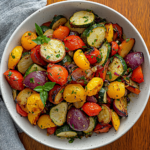
Roasted Vegetable Salad
- Prep Time: 10
- Cook Time: 25
- Total Time: 35
- Yield: 4 servings 1x
- Category: Salads
- Method: Roasting
- Cuisine: American
- Diet: Vegetarian
Description
A vibrant and earthy salad featuring roasted zucchini, bell peppers, red onions, and cherry tomatoes tossed with fresh greens and a zesty balsamic-Dijon dressing. Perfect for any season, it’s a deliciously satisfying and lightweight dish that balances roasted sweetness with refreshing tang.
Ingredients
1 medium zucchini, sliced into half-moons
1 red bell pepper, cut into strips
1 red onion, cut into wedges
1 pint cherry tomatoes
1 handful of arugula (or substitute with baby spinach)
1 tablespoon olive oil
Salt and cracked black pepper, to taste
1/4 cup balsamic vinegar
1 teaspoon Dijon mustard
1 teaspoon honey
2 tablespoons extra virgin olive oil
Freshly chopped herbs (e.g., parsley or basil), for garnish
Instructions
Preheat the oven to 425°F (220°C)
Toss the zucchini, bell pepper, red onion, and cherry tomatoes with olive oil, salt, and cracked black pepper in a large bowl
Arrange the vegetables in a single layer on a baking sheet
Roast for 25 minutes, or until tender and slightly caramelized around the edges
While the vegetables roast, prepare the dressing by whisking balsamic vinegar, Dijon mustard, honey, and extra virgin olive oil in a small bowl
When the vegetables are done, let them cool slightly and then transfer to a large serving bowl
Toss with the arugula and pour the dressing over the top
Mix gently to combine and adjust seasoning to taste
Sprinkle with chopped herbs before serving
Notes
For a protein-packed variation, add 1 cup of cooked chickpeas or grilled tofu.
This salad is best served fresh but can be stored in an airtight container in the fridge for up to 2 days.
The recipe is easy to scale by doubling the quantities and adjusting the roasting time if needed.
Nutrition
- Serving Size: 1 serving
- Calories: 190
- Sugar: 6g
- Sodium: 240mg
- Fat: 13g
- Saturated Fat: 2g
- Carbohydrates: 16g
- Fiber: 4g
- Protein: 4g
- Cholesterol: 0mg